Fornecer produtos de alta qualidade para acessórios para tubos
Melhor parceiro de grossistas de acessórios para tubos, acessórios para tubos em stock, email sales@hfittings.com para mais detalhes
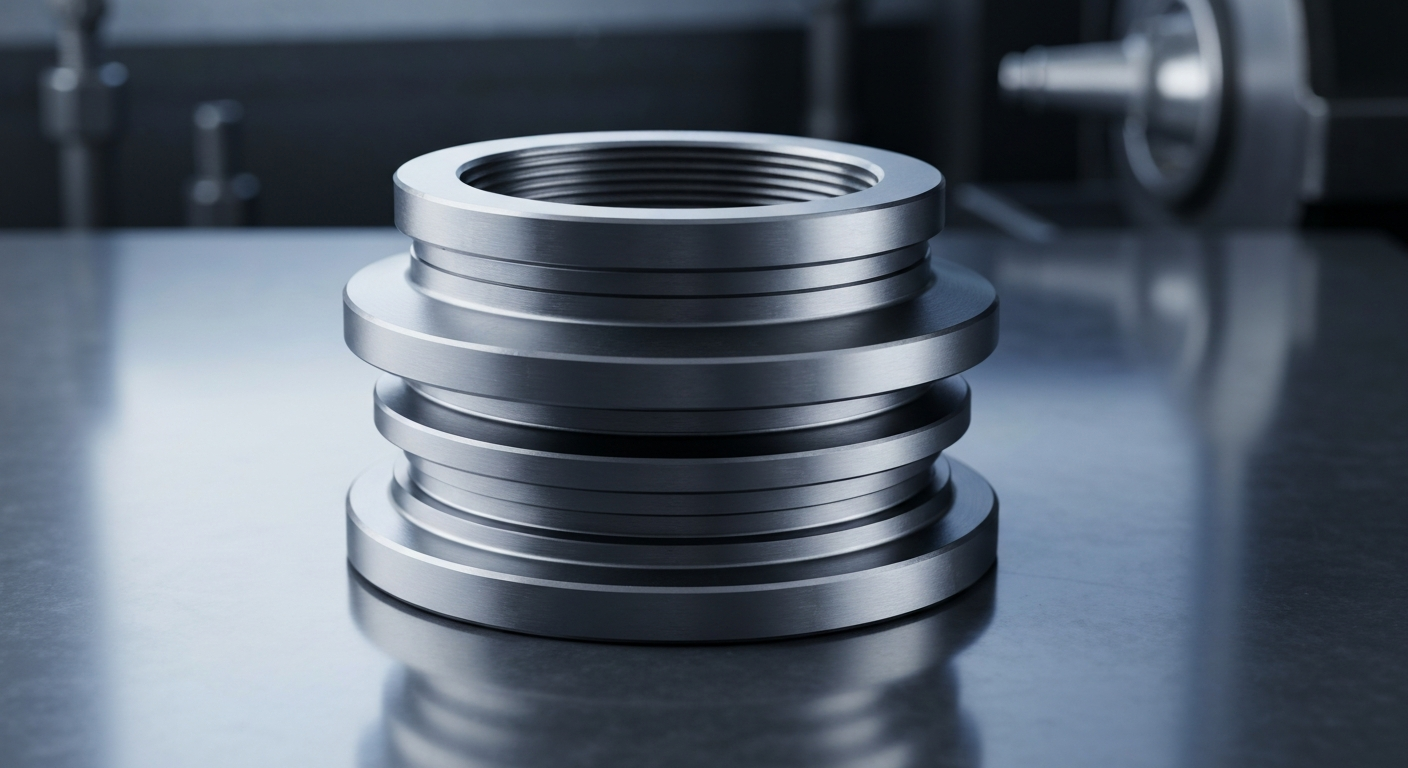
Welcome to the world of pipe fittings! Have you ever wondered how complex piping systems connect pipes of different sizes seamlessly? The answer often lies in a small but mighty component called a reducer. Specifically, the concentric reducer is a crucial type of pipe fitting that ensures your system operates efficiently. This guide will walk you through everything you need to know about the 1-inch concentric reducer, a common yet vital part of many industrial and commercial applications.
A 1-inch concentric reducer is a specific type of pipe fitting designed to join two pipes of different diameters. Its main purpose is to create a gradual and smooth transition, which is essential for maintaining the efficiency and stability of a piping system. By reducing the pipe size, it helps control fluid flow without causing major disruptions.
This component is easily recognizable by its symmetrical, cone-like shape. This design ensures that the centerline of both the larger and smaller pipes remains aligned. Let’s explore its definition and key applications to better understand its role.
A concentric reducer is a type of pipe fitting with a distinct conical shape, where both ends are aligned along the same central axis. This symmetrical structure is its defining feature, distinguishing it from other reducer types. Its primary job is to connect a larger pipe to a smaller diameter pipe, facilitating a smooth transition for the fluid or gas flowing through.
The core functionality of a 1-inch concentric reducer revolves around its use in vertical piping. When you need to reduce the pipe size in a system where the flow is moving up or down, this fitting is the perfect choice. It helps prevent issues like backflow and ensures that the pressure remains stable as the fluid moves from the larger section to the smaller one.
This design minimizes turbulence and pressure loss, which is why it’s so valuable. By maintaining a consistent and centered flow, the concentric reducer enhances the overall performance and reliability of the entire piping network, especially in pump and compressor systems.
The 1-inch concentric reducer is a versatile component used across various industries thanks to its effective design. Its ability to manage fluid flow makes it a staple in any piping system that requires a change in pipe diameter. You’ll find it in applications ranging from simple water lines to complex chemical processing plants.
This fitting is particularly well-suited for vertically oriented pipelines. In these setups, its symmetrical shape ensures that fluid or gas transitions smoothly without creating unwanted pockets or blockages. This is critical for maintaining system integrity and efficiency.
Algumas das aplicações mais comuns incluem:
The design of a concentric reducer is straightforward yet highly effective. Its key feature is its symmetrical design, which looks like a perfect cone. This shape is fundamental to its function, allowing for a gradual and even flow transition from a larger pipe to a smaller one. This ensures a consistent flow without sudden shifts that could disrupt the system.
Because both openings share a common centerline, the fluid dynamics are predictable and stable. This simple design of a concentric reducer is what makes it so reliable for specific applications. Next, we will look at its structural characteristics and connection types.
The most important structural characteristic of a concentric reducer is its symmetrical design. This means the centers of the large and small ends are perfectly aligned, creating a cone shape. This alignment is what separates it from an eccentric reducer, which has an offset centerline.
This cone-shaped structure directly influences flow dynamics. As fluid passes through the reducer, the gradual tapering allows for a smooth flow transition. This design helps maintain a consistent fluid velocity and minimizes turbulence. Why does this matter? Less turbulence means less energy loss and a lower risk of pressure loss within the system.
The flow direction is managed evenly, making it ideal for vertical pipelines where gravity is a factor. By preventing abrupt changes in flow, the concentric reducer contributes to a more stable and efficient system, protecting other components like pumps and valves from potential damage caused by erratic flow.
Concentric reducers are designed to be compatible with various installation methods, depending on the system’s needs. The type of end connections you choose will depend on factors like pressure, temperature, and the type of pipe being used. These connections ensure a secure and leak-proof transition.
One of the most common and robust connection methods is the butt weld. In a butt weld connection, the ends of the reducer are beveled and welded directly to the pipes. This creates a strong, permanent bond that is ideal for high-pressure and high-temperature applications. A 1-inch stainless steel concentric reducer is often installed this way.
Other popular end connections include:
When selecting a 1-inch concentric reducer, the material is just as important as the design. These fittings are available in a wide range of materials to suit different service conditions and media requirements across various industries. The most common choices are metals like stainless steel and carbon steel due to their strength and versatility.
However, other material variants, including plastics and alloy steels, are also available for specialized applications. The choice of material depends on factors like corrosion resistance, temperature, pressure, and the fluid being transported.
Stainless steel is a popular choice for concentric reducers, and for good reason. This material offers excellent corrosion resistance, making it perfect for use in food processing, pharmaceutical, and chemical systems where hygiene and purity are paramount. A stainless steel pipe fitting can handle corrosive fluids without degrading, ensuring a long service life.
Carbon steel is another widely used option. Known for its high strength and durability, carbon steel is a cost-effective choice for general industrial and utility pipelines. It’s suitable for systems that don’t involve highly corrosive materials but require a robust fitting that can withstand significant stress.
The type of pipe you are connecting will often dictate whether you choose stainless or carbon steel. Matching the reducer’s material to the pipe’s material is a best practice to prevent issues like galvanic corrosion and ensure system compatibility.
Beyond stainless and carbon steel, there are several other material variants available for concentric reducers. These alternatives cater to specific environmental conditions and system requirements. For example, alloy steels are used in high-pressure, high-temperature, or chemically aggressive environments where standard steels may fail.
Plastic options like PVC and CPVC are also common. These materials are lightweight, easy to install, and offer great resistance to corrosion. You’ll often find this type of pipe fitting in low-pressure applications, such as drainage, venting, and non-metallic water systems. Brass is another option, often seen in plumbing and water lines.
For industries with strict hygiene standards, special food-grade and sanitary materials are used. Stainless steel is often the base for these, but it is polished and finished to meet sanitary requirements, ensuring no contaminants are trapped. This makes it suitable for beverage and dairy processing.
When you see a steel pipe reducer, you’ll often notice terms like “SCH 40” on it. This refers to the pipe schedule, which is a standard that dictates the wall thickness of the fitting. Along with the schedule, pressure ratings are critical for ensuring the reducer can handle the demands of your piping system.
These ratings and schedules are essential for safely connecting pipes of different diameters, especially in systems operating under pressure. Understanding what they mean will help you choose the right component for your project.
So, what exactly does SCH 40 signify? The term “SCH” stands for schedule, and the number that follows indicates the wall thickness of a pipe or pipe fitting. For a 1-inch steel pipe reducer, SCH 40 specifies a standard thickness that is designed to handle a certain amount of internal pressure. A higher schedule number means a thicker wall.
This measurement is crucial for ensuring the structural integrity of your piping. Using a reducer with the wrong schedule could lead to system failure, especially under high pressure. SCH 40 is a common schedule used in a wide variety of commercial and industrial applications due to its balance of strength and cost.
The wall thickness of a reducer can vary between its larger and smaller ends, but both must comply with the specified schedule. Here is an example of nominal wall thickness for SCH 40 reducers:
Large End (DN) | Small End (DN) | Wall Thickness (Large/Small) in mm |
|---|---|---|
80 | 50 | 5.49 / 3.91 |
100 | 80 | 6.02 / 5.49 |
In addition to the schedule, pressure ratings are a vital piece of information for any pipe reducer. These ratings define the maximum internal pressure that a fitting can safely withstand at a given temperature. Selecting a reducer with the correct pressure rating is non-negotiable for the safety and reliability of your piping system.
The suitability of a reducer for different environments is directly tied to its pressure rating and material. For instance, a system operating at high temperatures and pressures, like a steam line, will require a reducer made from a material like alloy steel with a high-pressure rating.
When selecting a reducer, consider the following:
Proper installation is key to getting the most out of your 1-inch concentric reducer. The method you choose will depend on the pipe material, system pressure, and whether the connection needs to be permanent. The most common method for steel reducers is butt weld installation, which provides a strong and durable seal.
However, there are alternative joining methods available, such as flanged or threaded connections, which might be more suitable for certain applications. Following best practices for any installation method is essential for a leak-free and efficient system.
Butt weld installation is the preferred method for high-pressure systems because it creates a connection that is as strong as the pipe itself. This process involves welding the ends of the concentric reducer directly onto the ends of the pipes. It’s the go-to choice for permanent installations where strength and reliability are critical.
When should you choose a butt weld connection? It’s ideal for applications in the oil and gas, chemical, and power generation industries, where leaks are not an option. A butt weld concentric reducer ensures a smooth, continuous interior surface, which reduces friction and pressure drop.
The basic steps for a butt weld installation include:
While butt welding is common, it’s not the only way to perform an installation. There are several alternative joining methods, each with its own set of advantages. These options are often used in systems where welding is impractical or where components may need to be disassembled for maintenance.
For example, flanged connections use bolts to join the reducer to the pipes, creating a strong but removable seal. Threaded connections are common for smaller, low-pressure pipes and allow for easy assembly and disassembly. Socket welding is another technique where the pipe is inserted into a recess in the reducer before being welded.
Regardless of the method, following best practices is crucial for ensuring a smooth fluid flow.
In the world of pipe fittings, you’ll encounter two main types of reducers: concentric and eccentric reducers. While they both serve the same basic purpose of connecting different-sized pipes, their structural differences lead to very different applications. Understanding these distinctions is key to designing an effective piping system.
A concentric reducer is symmetrical, while an eccentric reducer is offset. This may seem like a minor detail, but it has a major impact on fluid dynamics. Let’s look at the structural and application differences more closely.
The most obvious difference between these reducers is their shape. A concentric reducer has a symmetrical design, like a cone, with a shared centerline. In contrast, eccentric reducers have an offset design, where one side is flat, causing the centerlines of the two ends to be misaligned.
This structural variation dictates their use. The symmetrical design of a concentric reducer is perfect for vertical piping. It allows for a smooth, centered flow transition, which is ideal for pump discharge lines and other vertically oriented flows.
On the other hand, eccentric reducers are the standard for horizontal pipelines.
Choosing the right type of reducer comes down to one primary factor: the orientation of your piping system. Getting this choice right is fundamental to your project’s success and will help you avoid common flow problems down the line. It’s a simple decision that has a big impact.
For vertical piping systems, the choice is clear: use a concentric reducer. Its symmetrical shape ensures that flow remains aligned and stable, which is exactly what you need for upward or downward flows. This is the standard for applications like gravity-fed systems or compressor outlets.
If you are working with horizontal piping systems, an eccentric reducer is almost always the better choice. Its offset design is specifically engineered to manage the challenges of horizontal flow, such as preventing air or liquid from getting trapped. Making the correct choice between these two types is the first step in selecting the right reducer.
To ensure quality, safety, and interchangeability, 1-inch concentric reducers must comply with recognized industry standards. Organizations like ASME and ASTM publish standards that define everything from dimensions to material grades. These certifications are your guarantee that the pipe fitting will perform as expected.
These standards are especially important in critical applications, such as high-pressure systems or those requiring food-grade materials. Complying with these standards ensures that every component in your system works together seamlessly.
Key standards from the American Society of Mechanical Engineers (ASME) and the American Society for Testing and Materials (ASTM) govern the manufacturing of pipe fittings. These certifications ensure that a pipe fitting meets strict requirements for dimensional accuracy, material composition, and performance.
Para redutores soldados a topo, a ASME B16.9 é uma das normas mais importantes. Define as dimensões, as tolerâncias e as marcações para os acessórios de soldadura de topo forjados fabricados em fábrica. Do mesmo modo, as normas ASTM especificam as propriedades dos materiais, tais como a composição química e a resistência mecânica do aço utilizado.
Seguir estas normas não é apenas uma recomendação; é um requisito para muitas aplicações industriais para garantir a segurança e a compatibilidade. Eis um breve resumo de algumas normas comuns:
Padrão | Descrição |
|---|---|
ASME B16.9 | Define as dimensões e as tolerâncias dos acessórios de soldadura topo a topo. |
ASME B36.10M | Especifica as dimensões dos tubos de aço forjado com e sem soldadura. |
ASTM A234 | Abrange os acessórios forjados de aço-carbono e de aço-liga. |
ASTM A403 | Abrange os acessórios de aço inoxidável austenítico forjado. |
Sim, um redutor concêntrico de 1 polegada pode absolutamente ser usado em aplicações sanitárias ou de segurança alimentar, desde que cumpra requisitos específicos. Para que um encaixe de tubagem seja considerado de qualidade alimentar, tem de ser fabricado com materiais que não contaminem o produto e ter um acabamento de superfície que impeça o crescimento bacteriano.
O aço inoxidável é o material de eleição para estas aplicações devido à sua excelente resistência à corrosão e às suas propriedades não reactivas. A transição suave oferecida por um redutor concêntrico também é benéfica, pois minimiza as áreas onde partículas de alimentos ou micróbios podem ficar presos. Este é um aspeto crítico do design sanitário.
Para ser certificada como sanitária, uma redutora deve cumprir determinados critérios:
Depois de determinar que precisa de um redutor concêntrico, o passo seguinte é selecionar o tamanho correto. Os redutores vêm em opções de tamanho padrão para conectar diâmetros de tubos comuns. Para um redutor de 1 polegada, isto significa que uma extremidade foi concebida para se adaptar a um tubo de 1 polegada, enquanto a outra extremidade se adapta a um tamanho diferente e mais pequeno.
É fundamental adequar o redutor ao seu sistema. Um redutor de tamanho incorreto pode criar problemas de fluxo, aumentar a queda de pressão e comprometer a eficiência de todo o seu sistema de tubagem. Vejamos como navegar pelos tamanhos disponíveis.
Os redutores concêntricos estão disponíveis numa vasta gama de opções de tamanho padrão para facilitar as ligações entre praticamente quaisquer dois tamanhos de tubos. Estes tamanhos são definidos por normas como a ASME B16.9, que garante que um redutor de um fabricante se adapta a um tubo de outro. Um “redutor de 1 polegada” descreve tipicamente um encaixe em que a extremidade maior se liga a um tubo com um tamanho nominal de 1 polegada.
A extremidade mais pequena pode ser de qualquer tamanho padrão, como 3/4 de polegada ou 1/2 de polegada. Quando encomendar, terá de especificar os diâmetros da extremidade grande e pequena. Por exemplo, pode encomendar um “redutor concêntrico de 1 x 3/4 polegadas”. Esta normalização simplifica a conceção e a construção de qualquer sistema de tubagem.
Aqui está uma tabela que mostra algumas combinações de tamanhos de redutores comuns e os seus comprimentos, de acordo com a norma ASME B16.9:
Extremidade grande OD (mm) | Extremidade pequena OD (mm) | Comprimento central (mm) |
|---|---|---|
88.9 | 60.3 | 102 |
114.3 | 88.9 | 127 |
168.3 | 114.3 | 152 |
Selecionar o tamanho correto do redutor envolve mais do que apenas fazer corresponder os diâmetros dos tubos. Para garantir um desempenho ótimo do seu sistema de tubagem, é necessário ter em conta vários factores-chave. Estes factores ajudá-lo-ão a manter um fluxo de fluido suave e a evitar potenciais problemas como queda de pressão excessiva ou vibração.
Em primeiro lugar, é necessário saber o diâmetro exterior exato dos dois tubos que vai ligar. Este é o passo mais básico para escolher o tamanho correto. Para além disso, deve considerar os requisitos de caudal do seu sistema. Um redutor mal dimensionado pode atuar como um estrangulamento, restringindo o fluxo e reduzindo a eficiência.
Eis alguns factores críticos a ter em conta:
O redutor concêntrico de 1 polegada é um cavalo de batalha em vários sectores da indústria. O seu design simples e eficaz torna-o um componente de referência para gerir transições de tamanhos de tubos numa variedade de aplicações. Encontrará este acessório em tudo, desde tubagens de processo em grande escala a sistemas comerciais de AVAC.
O seu papel é sempre o mesmo: proporcionar uma transição suave e centrada que mantenha a estabilidade do fluxo. Quer se trate de uma linha de água, de um sistema químico ou de um oleoduto e gasoduto, o redutor concêntrico desempenha um papel vital na eficiência de todo o sistema de tubagem.
No mundo das tubagens de processo, o controlo preciso do manuseamento de fluidos é essencial. Os redutores concêntricos são amplamente utilizados nestes ambientes para ligar diferentes fases de um processo. Por exemplo, são normalmente instalados nas saídas de bombas ou compressores para fazer a transição para um diâmetro de tubo mais pequeno, o que pode aumentar a velocidade e a pressão do fluido, conforme necessário.
Este tipo de encaixe de tubagem é uma visão comum em fábricas de produtos químicos, refinarias de petróleo e instalações de fabrico de produtos farmacêuticos. Nestes locais, a manutenção de um fluxo estável e previsível é fundamental para a segurança e a qualidade do produto. O redutor concêntrico ajuda a atingir este objetivo, minimizando a turbulência e as flutuações de pressão.
Ao assegurar uma transição suave, o redutor também ajuda a proteger o equipamento sensível. Uma mudança abrupta no tamanho da tubagem pode causar vibrações ou picos que podem danificar bombas, válvulas e outros componentes dispendiosos. A mudança gradual proporcionada por um redutor concêntrico atenua estes riscos.
Para além da utilização industrial pesada, os redutores concêntricos são indispensáveis em sistemas AVAC, de água e químicos. Nos sistemas AVAC comerciais e residenciais, são utilizados em linhas de água fria e quente para se adaptarem a diferentes tamanhos de tubos à medida que o sistema de tubagem se ramifica através de um edifício. Isto ajuda a equilibrar a distribuição do caudal.
Em sistemas de água municipais e industriais, estes acessórios são utilizados tanto em linhas de abastecimento como de drenagem. Permitem aos projectistas utilizar linhas principais maiores e fazer a transição para linhas de distribuição mais pequenas, optimizando o custo e o desempenho. A sua capacidade para assegurar um fluxo de fluido suave é fundamental para a eficiência destas redes.
Para sistemas químicos, o design simétrico do redutor concêntrico é perfeito para reactores verticais e linhas de transporte. Assegura que os produtos químicos são misturados e transportados uniformemente, sem o risco de criar pontos mortos onde o material se possa acumular. Isto é vital para manter o controlo e a segurança do processo.
Em resumo, compreender o redutor concêntrico de 1 polegada é essencial para qualquer pessoa envolvida em sistemas de tubagem. As suas caraterísticas de design, escolhas de materiais e métodos de instalação desempenham um papel crucial na garantia de eficiência e segurança em várias aplicações, desde processos industriais a sistemas AVAC. Ao reconhecer a importância de escolher o redutor certo para as suas necessidades específicas e ao estar ciente das normas e certificações exigidas, pode melhorar o desempenho do sistema, reduzindo o risco de complicações no futuro. Se pretende aprofundar o mundo dos acessórios para tubos ou necessita de orientação personalizada, entre em contacto com os nossos especialistas para uma consulta gratuita.
Sim, um redutor concêntrico de 1 polegada é adequado para aplicações sanitárias e de qualidade alimentar se cumprir determinados requisitos. O encaixe do tubo deve ser feito de um material não reativo como o aço inoxidável e ter uma superfície interior polida e lisa para evitar o crescimento microbiano e cumprir todas as normas sanitárias.
Para selecionar o tamanho correto do redutor de tubos de aço, tem de o fazer corresponder aos diâmetros exteriores dos dois tubos que está a ligar. Além disso, considere factores como os caudais necessários, a pressão do sistema e a temperatura para garantir que a programação e a classificação de pressão do redutor são adequadas ao seu sistema de tubagem.
Deve escolher um redutor concêntrico de soldadura topo a topo para instalações de alta pressão, alta temperatura ou permanentes, onde a resistência e a integridade à prova de fugas são as principais prioridades. Este método de união cria uma ligação tão forte como o próprio tubo, tornando-o numa das melhores práticas para aplicações críticas.