고품질 파이프 피팅 제품 제공
파이프 피팅 도매업자의 최고의 파트너, 파이프 피팅 재고, 이메일 sales@hfittings.com 자세한 내용은 sales@hfittings.com


Common materials are carbon steel, stainless steel, and various alloys chosen for specific industrial needs.
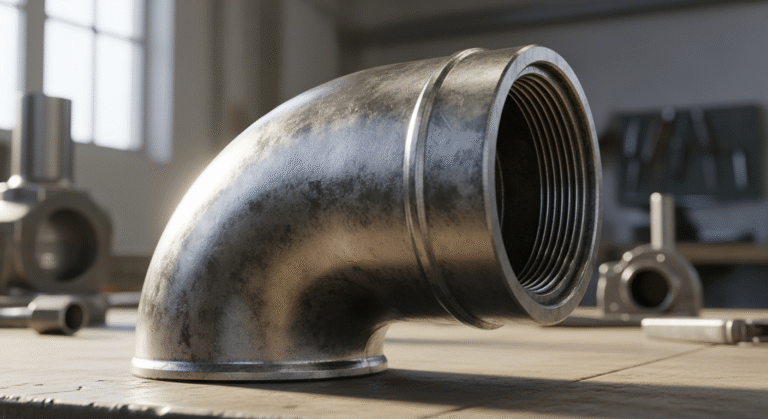
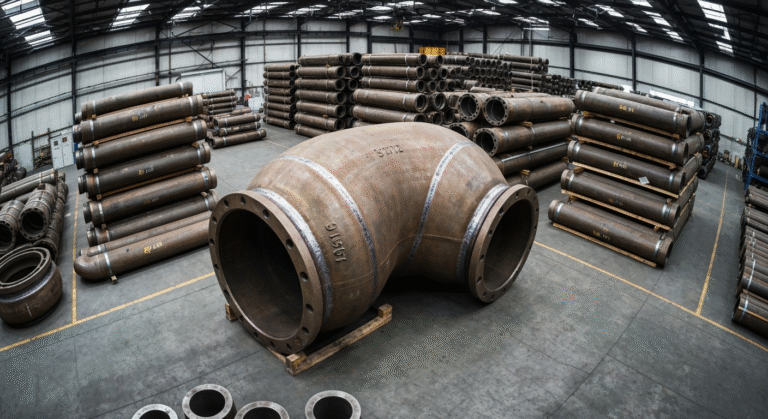
Welcome to the world of industrial piping! In any system that transports fluids, the ability to change direction is critical. That’s where pipe fittings, specifically elbows, come into play. While several types exist, the seamless elbow stands out for its strength and reliability. Unlike its welded counterpart, a seamless elbow is crafted from a single piece of seamless pipe. This guide will walk you through the fascinating manufacturing process of this essential steel pipe component and explain why it’s a top choice for demanding applications. Common sizes for seamless elbows typically range from 1/2 inch up to 48 inches in diameter, and standard angles available include 45 degrees, 90 degrees, and 180 degrees, allowing flexibility for a wide range of piping configurations.
Understanding how a seamless elbow is made begins with its core principle: a single, solid construction. The manufacturing process for these seamless fittings is designed to create a product without any joints or welds, which is what gives them their superior strength. This method ensures uniformity throughout the entire component.
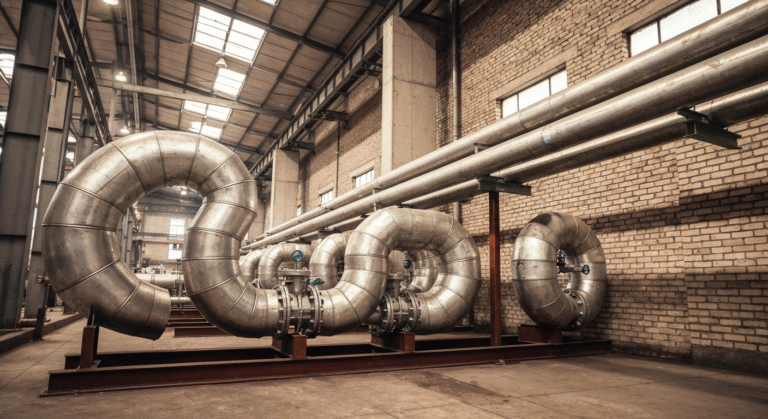
When selecting the right seamless elbow for a stainless steel piping system, consider factors such as the grade of stainless steel required, the pressure and temperature ratings of your application, and the compatibility with your existing piping dimensions. Choosing the appropriate seamless elbow ensures reliability and long-term performance in demanding environments.
Materials like carbon steel and stainless steel are commonly used, each offering distinct benefits for different environments. Now, let’s explore the specific features that define these fittings and the standards that govern their production.
So, what exactly is a seamless elbow? It’s a pipe fitting created from a single piece of metal without any welded seams. This is the main feature that distinguishes it from a welded elbow, which is made by joining pieces of pipe or plate together. The absence of a weld seam eliminates potential weak points, giving the seamless elbow superior structural integrity.
Because of this unified construction, these essential components are inherently stronger and more resistant to leaks, especially under high pressure and temperature. They are the go-to choice for critical applications where system failure is not an option.
The smooth interior of a seamless elbow also optimizes fluid flow. With no internal weld bead to cause friction, it minimizes turbulence and pressure loss, helping your entire piping system operate more efficiently. This makes it perfect for industries where consistent flow rates are paramount.
The material you choose for a seamless elbow depends entirely on the application’s demands. Stainless steel grades like 304 and 316 are popular for their excellent corrosion resistance, making them ideal for chemical processing and water treatment facilities. For less corrosive environments, carbon steel offers a strong and cost-effective solution. Specialty alloy options are also available for extreme temperature or pressure conditions.
To ensure quality and compatibility across global industries, the production of seamless elbows follows strict international standards. Organizations like the American Society for Testing and Materials (ASTM) and the American Society of Mechanical Engineers (ASME) set the rules for dimensions, material composition, and performance testing.
Adhering to these standards guarantees that the fittings you use are reliable, safe, and can be integrated seamlessly into your existing piping systems.
재료 | Common Standards | Key Benefits |
|---|---|---|
탄소강 | ASTM A234 | High strength and durability for general use. |
스테인리스 스틸 | ASTM A403 (e.g., WP304/316) | Superior corrosion resistance for harsh environments. |
합금강 | ASTM A234 | Enhanced performance in high-temperature and high-pressure applications. |
The journey of creating a seamless elbow is a precise and fascinating manufacturing process. It starts not with welding parts together but by transforming a solid piece of seamless steel pipe into a curved fitting. The goal is to create a smooth change of direction for fluid flow without compromising the structural integrity of the material.
This is typically achieved through hot forming, where heat and pressure are used to shape the pipe. Let’s look closer at the specific techniques used in production, as well as the critical inspection and quality control measures that ensure every butt weld fitting meets the highest standards.
One of the most common methods for making a seamless elbow is the hot forming mandrel technique. The process begins with cutting a section of seamless pipe to the correct length. This pipe is then heated to a high, malleable temperature.
Once heated, the pipe is pushed or pulled over a die known as a mandrel. This mandrel has the exact shape of the desired elbow, forcing the pipe to bend and expand into its final form. This creates a seamless product with a consistent wall thickness and a smooth interior surface, perfect for efficient fluid flow. After forming, the ends are often beveled to prepare them for butt welding into a pipeline.
Key steps in the mandrel method include:
Quality control is not just a final check; it’s a fundamental part of the entire seamless elbow manufacturing process. Rigorous inspection and testing ensure that every fitting meets demanding international standards and provides the reliability needed for critical systems. Without these checks, the durability and safety of the final product could be compromised.
Inspectors verify everything from the raw material composition to the final product’s dimensions. Critical checks include measuring the wall thickness to ensure it is uniform and can withstand the specified pressure. The elbow’s angle, diameter, and surface finish are also carefully examined to guarantee a perfect fit and optimal performance.
Common quality control measures include:
In summary, understanding the manufacturing process of seamless elbows is essential for ensuring quality and efficiency in piping systems. From the raw materials used to the various production techniques, each step plays a crucial role in delivering a reliable product. Seamless elbows not only offer superior strength and durability but also provide better flow characteristics compared to their welded counterparts. By being informed about the manufacturing process, you can make educated decisions that enhance the performance of your piping projects. Have questions or need assistance? Feel free to reach out for more information!
A seamless elbow is made from a single piece of steel pipe, so it has no welds or seams. This gives it uniform strength and thickness. In contrast, a welded elbow is created by joining pieces of metal, which can create potential weak points along the welds.
To select the right seamless elbow, you must consider your specific needs. Match the elbow’s diameter and wall thickness to your pipe. Also, determine the required angle (e.g., 90° or 45°) and radius (long or short) for your system. These essential components are crucial pipe fittings for any setup.
The main advantages are superior strength and durability because there are no weak weld points. They also offer better corrosion resistance and a smoother interior, which reduces turbulence and pressure loss. This leads to more efficient fluid flow and a longer service life for your piping system.