Hochwertige Rohrverbindungsprodukte anbieten
Bester Partner von Rohrverschraubungen Großhändler, Rohrverschraubungen auf Lager, E-Mail sales@hfittings.com für Details

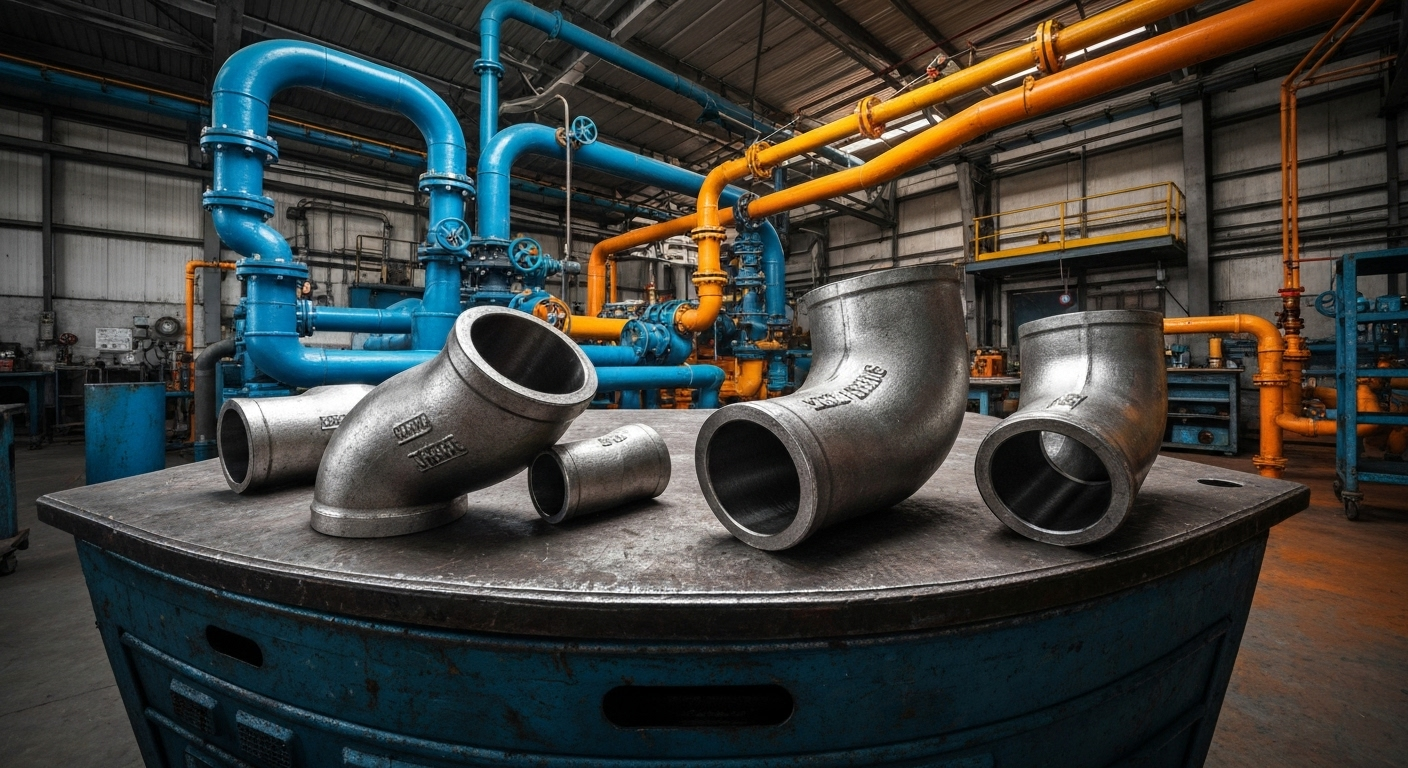
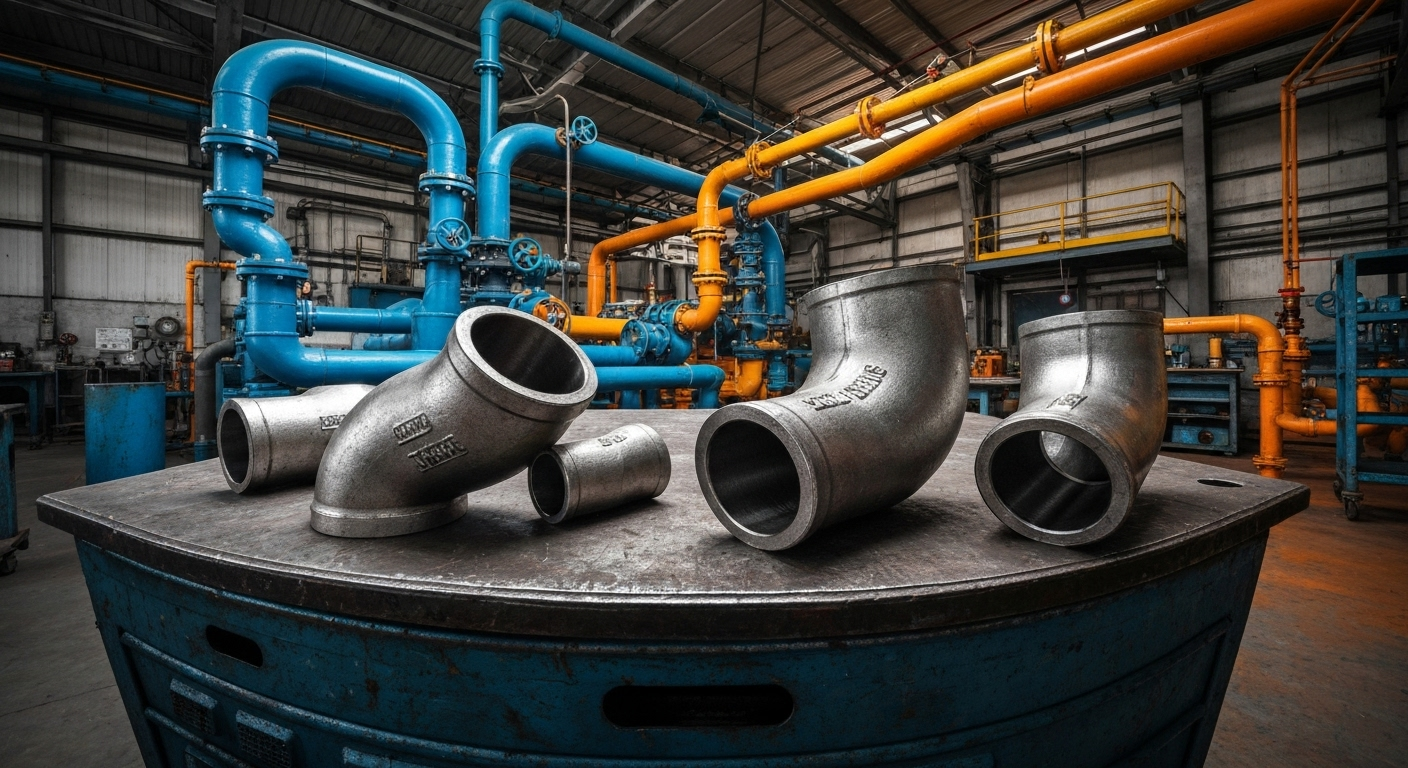
Im Folgenden finden Sie einen kurzen Überblick über die ASTM A234 WPB-Bogen:
Wenn Sie mit Rohrleitungssystemen arbeiten, ist die Auswahl der richtigen Komponenten entscheidend für Sicherheit und Effizienz. Zu den wichtigsten Teilen gehören die Rohrfittings, die alles miteinander verbinden. Ein ASTM A234 WPB-Krümmer ist ein wichtiger Akteur in diesem Bereich, insbesondere bei geschweißten Fittings. Diese Komponenten helfen Ihnen, die Richtung einer Stahlrohrleitung zuverlässig und stabil zu ändern. In diesem Leitfaden erfahren Sie alles, was Sie über diese wichtigen Fittings wissen müssen, von ihren Spezifikationen bis zu ihren Anwendungen.
Ein Krümmer aus Kohlenstoffstahl ist ein Fitting, das zur Änderung der Strömungsrichtung zwischen zwei Rohren verwendet wird. Die Bezeichnung ASTM A234 WPB sagt viel über seine Qualität und seinen Zweck aus. Es handelt sich um eine spezielle Kohlenstoffstahlsorte, die für geschweißte Fittings entwickelt wurde, die mäßigen und hohen Temperaturen standhalten können, was sie zu einer zuverlässigen Wahl für industrielle Rohrleitungen macht.
Diese Standardspezifikation stellt sicher, dass der von Ihnen verwendete Krümmer bestimmte Anforderungen an Festigkeit und Haltbarkeit erfüllt. Wenn Sie verstehen, was “WPB” bedeutet und warum Kohlenstoffstahl das Material der Wahl ist, können Sie die richtigen Komponenten für Ihr Projekt auswählen.
Der Begriff ASTM A234 WPB mag technisch anmuten, aber er ist leicht zu entschlüsseln. ASTM steht für die American Society for Testing and Materials, die technische Normen für eine breite Palette von Produkten festlegt. Der Teil A234 bezieht sich auf die Standardspezifikation für Armaturen aus geschmiedetem Kohlenstoffstahl und legiertem Stahl, die für Druckrohrleitungen bei moderaten bis erhöhten Temperaturen bestimmt sind.
Der Teil “WPB” enthält weitere Einzelheiten. “W” bedeutet “wrought” (geschmiedet) und weist darauf hin, dass die Armatur durch Schmieden oder Umformen und nicht durch Gießen hergestellt wird. “P” steht für “Pressure” (Druck), was die Eignung für druckhaltige Systeme bestätigt. Das “B” schließlich steht für “Grade B”, was sich auf die Mindeststreckgrenze des Rohmaterials bezieht und es mit den üblichen Rohrsorten wie ASTM A106 Grade B in Einklang bringt.
Diese Norm gewährleistet, dass die von Ihnen verwendeten Stahlfittings aus vollständig beruhigtem Stahl hergestellt werden und strenge Anforderungen an die chemischen und mechanischen Eigenschaften erfüllen. Dies garantiert gleichbleibende Leistung und Sicherheit bei anspruchsvollen Anwendungen. Weitere Einzelheiten zu dieser Norm finden Sie auf der Website von ASTM International. [1]
Kohlenstoffstahl ist aus mehreren guten Gründen ein bevorzugtes Material für geschweißte Fittings. Seine Hauptbestandteile sind Eisen und Kohlenstoff, was ihm eine fantastische Kombination aus Festigkeit und Härte verleiht. Obwohl er eine geringere Plastizität als andere Metalle aufweist, eignet er sich aufgrund seiner Zähigkeit perfekt für Systeme, die hohen Belastungen standhalten müssen.
Wenn es um geschweißte Fittings geht, sind die Eigenschaften von Kohlenstoffstahl ein großer Vorteil. Er ist gut schweißbar und ermöglicht starke und dauerhafte Verbindungen, die in Hochdruck- oder Hochtemperaturumgebungen unerlässlich sind. Dies macht die Installation und Reparatur von Rohrleitungen einfacher und zuverlässiger.
Ganz gleich, ob Sie ein neues Stahlrohr anschließen oder eine bestehende Anlage ändern wollen, Bögen aus Kohlenstoffstahl bieten die erforderliche strukturelle Integrität. Da sie mit einer bestimmten Wandstärke hergestellt werden können, passen sie perfekt zu den angeschlossenen Rohren und bilden ein nahtloses und robustes System.
Nicht alle Winkelstücke aus Kohlenstoffstahl sind gleich. Es gibt sie in verschiedenen Ausführungen und Spezifikationen, um den unterschiedlichen Anforderungen an Rohrleitungen gerecht zu werden. Die häufigsten Unterscheidungsmerkmale sind der Winkel des Bogens und der Radius der Kurve. Typischerweise gibt es 45-Grad- und 90-Grad-Bögen, die für unterschiedliche Richtungsänderungen geeignet sind.
Außerdem werden Rohrbögen entweder mit einem langen Radius (LR) oder einem kurzen Radius (SR) ausgeführt. Diese Wahl wirkt sich auf die Fließeigenschaften und den Platzbedarf des Fittings aus. Lassen Sie uns diese Unterschiede untersuchen, damit Sie verstehen, welcher Typ für Ihre Anwendung der richtige ist.
Die gebräuchlichsten Winkel, mit denen Sie arbeiten, sind 90 Grad und 45 Grad. Ein 90-Grad-Winkel, manchmal auch “vertikaler Winkel” genannt, erzeugt eine scharfe, rechtwinklige Kurve. Er ist der am weitesten verbreitete Typ, weil er gut zu Stahlkonstruktionen und Gebäudegrundrissen passt.
Ein 45-Grad-Krümmer hingegen bietet eine sanftere Richtungsänderung. Dieser scheinbar kleine Unterschied hat erhebliche Auswirkungen auf die Fluiddynamik im Rohr. Da die Kurve weniger abrupt ist, erzeugt ein 45-Grad-Bogen weniger Reibungswiderstand und einen geringeren Druckabfall als ein 90-Grad-Bogen derselben Nennweite.
Hier ist ein schneller Vergleich:
Neben dem Winkel ist der Radius des Rohrbogens eine weitere wichtige Angabe. Der Radius bezieht sich auf die Krümmung des Bogens. Sie können zwischen einem langen Radius (LR) und einem kurzen Radius (SR) wählen, und ja, beide sind für Bögen aus Kohlenstoffstahl erhältlich.
Ein Krümmer mit langem Radius hat einen Kurvenradius, der das 1,5-fache des Nenndurchmessers des Rohrs beträgt (R = 1,5D). Dadurch entsteht eine sanftere, allmählichere Kurve. Im Gegensatz dazu hat ein Bogen mit kurzem Radius einen Radius, der dem Nenndurchmesser des Rohrs entspricht (R = 1,0D), was zu einer viel schärferen und kompakteren Biegung führt.
Die Wahl zwischen ihnen hängt von den Anforderungen Ihres Systems an die Durchflussleistung und den Platzbedarf ab. LR-Krümmer werden bevorzugt, um die Durchflussmenge aufrechtzuerhalten und den Druckabfall zu minimieren, während SR-Krümmer ideal für enge Räume sind, in denen eine kompakte Armatur erforderlich ist.
Merkmal | Langradius-Winkel (LR) | Kurzwinkel-Ellbogen (SR) |
|---|---|---|
Radius | 1,5 x Rohrdurchmesser (1,5D) | 1,0 x Rohrdurchmesser (1,0D) |
Fluss | Ruhigerer Durchfluss, weniger Turbulenzen, geringerer Druckabfall | Schärfere Kurve, mehr Turbulenzen, höherer Druckabfall |
Anmeldung | Hochdruck-Pipelines mit hohem Durchsatz | Niederdrucksysteme oder bei beengten Platzverhältnissen |
Weltraum | Benötigt mehr Platz | Kompakt, ideal für enge Installationen |
Bei der Auswahl eines Stahlrohrbogens müssen Sie sich auch zwischen einer nahtlosen und einer geschweißten Konstruktion entscheiden. Dies bezieht sich auf die Art und Weise, wie der Bogen aus seinem Rohmaterial hergestellt wurde. Ein nahtloser Rohrbogen wird aus einem massiven Stück nahtlosen Rohrs hergestellt, während ein geschweißter Bogen aus einer Stahlplatte oder einem geschweißten Rohr gefertigt wird.
Jedes Herstellungsverfahren hat seine eigenen Vorteile und eignet sich für unterschiedliche Anwendungen. Der Hauptunterschied liegt in der strukturellen Integrität und in der Art der Formgebung, die wiederum ihre Leistung unter Druck beeinflusst. Sehen wir uns an, wie sie hergestellt werden und wann die einzelnen Typen verwendet werden sollten.
Das Herstellungsverfahren für nahtlose und geschweißte Rohrbögen ist recht unterschiedlich. Zur Herstellung eines nahtlosen Rohrbogens wird ein Stück nahtloses Rohr erhitzt und dann durch eine Form oder einen Dorn gedrückt, der es in die Form eines Bogens presst. Da er aus einem einzigen Stück Stahlrohr hergestellt wird, gibt es keine Nähte oder Verbindungen.
Geschweißte Fittings hingegen können auf verschiedene Weise hergestellt werden. Eine Methode besteht darin, eine polygonale Schale aus einer Stahlplatte zu formen und dann die Nähte zu schweißen. Ein anderer Ansatz ist die Verwendung eines schmelzgeschweißten Rohrs mit Zusatzwerkstoff als Ausgangsmaterial, das dann zu einem Bogen geformt wird.
Der wichtigste Unterschied ist das Vorhandensein einer Schweißnaht. Bei nahtlosen Rohrbögen fehlt diese, was einige Ingenieure für kritische Anwendungen bevorzugen. Dank der Fortschritte in der Schweißtechnik sind moderne geschweißte Formstücke jedoch äußerst zuverlässig, selbst bei der Herstellung von Rohrbögen mit großem Durchmesser.
Deciding between a seamless or welded elbow often comes down to the specific demands of your pipeline systems. Seamless elbows are traditionally favored for applications involving higher pressure and critical services because their uniform structure has no weld seams, which could be potential weak points.
However, welded fittings have become increasingly robust and are a practical choice for many situations. They are often more cost-effective, especially for larger diameter elbows. Modern manufacturing and quality control ensure that welded options perform reliably in a vast range of industrial applications.
Consider these points when making your choice:
Selecting the correct ASTM A234 WPB elbow is crucial for the integrity and performance of your piping system. You can’t just pick any elbow; you need to consider several factors to ensure it fits perfectly and functions as intended. The main considerations are the elbow’s size, radius, and wall thickness.
These parameters must match the pipes they are connecting to and the operational requirements of the system, such as pressure and flow rate. Making the right choice ensures a secure, leak-free connection and an efficient pipeline. Let’s break down how to select the right specifications for your needs.
Getting the specifications right is the most important step in choosing an elbow. The size, radius, and wall thickness must align with the rest of your piping system to ensure a proper fit and safe operation.
First, the nominal size of the elbow must match the diameter of the pipes you are connecting. Next, you’ll need to decide between a long radius (LR) or short radius (SR) design based on space and flow requirements. As discussed, LR elbows offer smoother flow, while SR elbows are for tight corners. Finally, the wall thickness, often specified by a schedule number (e.g., SCH 40, SCH 80), must match the pipe’s wall thickness to handle the system’s internal pressure.
Here’s a checklist for selection:
Butt-weld elbows are steel fittings designed to be welded directly to the end of a pipe. This connection method creates a strong, leak-proof, and continuous joint, making it the preferred choice for demanding applications. Unlike socket weld or threaded fittings, a butt-weld joint offers a smooth interior surface that minimizes pressure drop and turbulence.
Because of their robustness, butt-weld elbows are the standard for high-pressure and high-temperature services. You will commonly find them in critical pressure piping systems across various industries. For example, they are essential components in power plants for carrying steam, in chemical facilities for transporting aggressive fluids, and in oil and gas pipelines.
Their strength also makes them ideal for pipeline repair, as they can restore the full integrity of the pipe. While a socket weld fitting is suitable for smaller diameter pipes in less critical services, a butt-weld elbow is the superior choice when performance and safety are paramount.
Proper installation is just as important as selecting the right part. When it comes to welded elbows, a correct installation process ensures a strong, lasting connection that maintains the integrity of your pipeline systems. The process involves careful preparation, precise welding, and thorough inspection.
Following a set of established guidelines for installing these steel fittings will help you avoid common pitfalls and ensure a safe, leak-free joint. Let’s go over the key steps for preparation and welding, as well as the importance of post-installation quality checks.
A successful weld starts with good preparation. Before you begin welding, the ends of both the pipe and the elbow must be clean and properly beveled. This ensures that the filler metal can penetrate the joint completely, creating a strong bond. Any rust, oil, or contaminants must be removed.
During the welding process, it’s crucial to maintain proper alignment and a consistent gap between the parts. The choice of filler metal should be compatible with the carbon steel being joined. For systems with higher pressure, the quality of the weld is paramount. Unlike a socket weld elbow where the pipe is inserted, a butt-weld requires a precise, edge-to-edge connection.
Follow these key steps for installation:
Once the welding is complete, inspection and quality assurance are the final steps to guarantee a reliable joint. The first check is usually visual. You should inspect the weld for any visible defects like cracks, undercut, or lack of fusion. A smooth, uniform weld bead is a good sign of quality work.
For more critical applications, additional non-destructive testing (NDT) methods may be required. These can include radiographic (X-ray) or ultrasonic testing to check for internal defects that aren’t visible to the naked eye. It’s also important to measure the final dimensions to ensure they meet the project’s requirements.
In many industrial settings, a third-party inspection is performed to verify that the installation complies with the relevant standard specification, such as ASME B16.9. This provides an extra layer of quality assurance and confirms the pipeline is safe for operation. For more information on this standard, you can visit the ASME website. [2]
Choosing ASTM A234 WPB elbows for your project comes with a host of advantages. These fittings are known for their exceptional durability and performance, especially in systems that operate at higher pressure and temperature. Their robust construction ensures they can withstand significant mechanical stress without failing.
Compared to an alloy steel pipe or fittings made from other materials, carbon steel offers a unique balance of strength, cost-effectiveness, and reliability. Let’s delve into what makes their performance so dependable and why carbon steel is often the best material for the job.
The performance of ASTM A234 WPB elbows is defined by their strength and resilience. These fittings are engineered to manage the demands of industrial pipeline systems, including the ability to handle higher pressure and temperature fluctuations without compromising their structural integrity. This reliability is essential for maintaining safety and operational continuity.
Their durability translates to a long service lifetime. When properly installed and maintained, carbon steel elbows can last for decades, reducing the need for frequent replacements and minimizing downtime. This long-term performance makes them a cost-effective investment for any large-scale project.
Whether you’re building a new pipeline or upgrading an existing one, you can count on the consistent performance of these fittings. Their ability to endure harsh conditions while maintaining a secure, leak-free connection is why they are a trusted component in so many industries.
While materials like stainless steel, nickel alloy, and other alloy steel options offer excellent corrosion resistance, carbon steel stands out for its unique combination of properties. For many applications, it provides the best overall value.
The primary advantage of carbon steel is its high strength and toughness at a much lower cost than stainless steel or nickel alloys. This makes it an economical choice for large-scale projects where material costs can add up quickly. It’s also highly versatile and easy to fabricate and weld.
Here’s why carbon steel is often preferred:
Thanks to their strength and reliability, ASTM A234 WPB elbows are used in a wide array of pipeline systems across numerous industries. You’ll find these essential components in everything from massive power plants and oil refineries to local water treatment facilities. Their versatility makes them a staple for many industrial projects.
They are particularly common in systems that transport fluids or gases under pressure, such as gas pipelines, chemical processing plants, and shipbuilding. Understanding the difference between industrial and plumbing applications can help you appreciate their broad utility.
The use of carbon steel elbows differs significantly between industrial and plumbing projects. In industrial settings, such as oil and gas pipelines or chemical plants, the focus is on handling high pressures, extreme temperatures, and potentially corrosive substances. Here, butt-weld carbon steel elbows are the standard due to their strength and leak-proof design.
Plumbing applications, like residential or commercial water supply, typically operate under much lower pressures. While carbon steel can be used, these systems might also employ other materials or connection types like threaded or socket weld fittings, which are easier to install and maintain for smaller-diameter pipes.
However, for larger-scale water treatment plants or municipal water mains, the durability of carbon steel fittings is often necessary. In these large-scale “plumbing” systems, the requirements begin to resemble those of industrial pipeline systems, making carbon steel an excellent choice.
Finding reliable suppliers for ASTM A234 WPB elbows is a key step for any project. You can source these fittings from specialized industrial piping suppliers, metal distributors, and manufacturers. Many suppliers operate online, allowing you to request quotes and place orders with delivery often promised within a few business days.
When choosing a supplier, it’s important to verify their credibility. Look for suppliers who can provide mill test certificates (MTCs) and documentation that proves the fittings meet the required standards. Reputable suppliers will have clear labeling on their products, including the grade, size, schedule, and heat number.
Here’s how to find the right source:
In summary, understanding ASTM A234 WPB elbows is crucial for anyone involved in the welding and piping industries. These fittings offer essential advantages, from durability to performance, making them a popular choice for various applications. By grasping the differences between seamless and welded options, as well as how to select the right size and specifications, you can ensure efficient and effective installations. Whether you’re working on industrial projects or plumbing systems, knowing where to source high-quality ASTM A234 WPB elbows will empower you to make informed decisions. If you have any questions or need assistance with your next project, feel free to reach out for support!
Yes, ASTM A234 WPB elbows are available in both long radius (LR) and short radius (SR) designs. The standard specification covers both types, allowing you to choose a long radius pipe elbow for smoother flow or a short radius one for installations in tight, compact spaces.
To determine the correct size elbow, you must match its nominal size and wall thickness (schedule) to the steel pipe in your piping system. Both the elbow and the pipe must have the same diameter and schedule number to ensure a proper fit and to safely handle the system’s pressure.
The key benefits of a butt-weld elbow include creating a strong, leak-proof joint that is as strong as the pipe itself. These welded fittings are ideal for pipeline systems with higher pressure and temperature, offering excellent durability and a smooth inner surface that minimizes flow restrictions.
Citations: [1] ASTM A234/A234M-23, Standard Specification for Piping Fittings of Wrought Carbon Steel and Alloy Steel for Moderate and High Temperature Service, ASTM International, West Conshohocken, PA, 2023, www.astm.org/a0234_a0234m-23.html [2] ASME B16.9, Factory-Made Wrought Buttwelding Fittings, The American Society of Mechanical Engineers, New York, NY, www.asme.org/codes-standards/find-codes-standards/b16-9-factory-made-wrought-buttwelding-fittings