Fournir des produits de raccords de tuyauterie de haute qualité
Meilleur partenaire des grossistes en raccords de tuyauterie, raccords de tuyauterie en stock, envoyez un courriel à sales@hfittings.com pour plus de détails.

Voici les principaux points à retenir de ce guide :
The bend radius is a crucial measurement in the steel industry that determines the curve’s tightness in a steel pipe.
If you need to bend a steel pipe without a pipe bender, one of the best methods is to use heat by carefully applying a torch to the area you want to bend, then manually shaping the pipe around a sturdy form while ensuring you achieve the correct bend radius. Always wear appropriate safety gear and take necessary precautions when working with heat and steel.
Tube bending can be done manually with a pipe bender or with specialized machinery for greater accuracy. If you require custom steel pipe bending services, many specialized fabrication shops and metalworking companies offer tube bending solutions tailored to your project needs.
Welcome to the world of steel pipe fabrication! Whether you’re working on an architectural masterpiece or an industrial application, bending a steel pipe correctly is a fantastic job that is critical for your project’s success. A key part of this process is understanding the bend radius. Getting this measurement right ensures your components fit perfectly and function as intended. This guide will walk you through the essentials of tube bending, helping you measure the bend radius like a pro.
If you’re looking for custom steel pipe bending services, many fabrication shops and specialized metalworking companies offer these solutions. It’s best to search for local providers with expertise in steel pipe fabrication to ensure quality and precise results for your project.
When you change the direction of a steel pipe, you’re performing a process known as tube bending. This isn’t just about forcing metal into a new shape; it’s a precise task where factors like the diameter of the pipe and its wall thickness make a significant contribution to the overall results. If you don’t have a pipe bender, the best way to bend a steel pipe is to apply gradual, steady pressure using manual leverage while supporting the pipe with a form or jig that matches your desired bend radius. Heating the pipe with a torch can also help make the steel more pliable, reducing the risk of kinks or cracks during the bend. Always ensure to bend slowly and evenly for optimal results.
A central concept in this process is the bend radius. How does the bend radius affect a steel pipe bend? It dictates how gentle or sharp the curve will be, directly impacting the pipe’s structural integrity, flow efficiency, and the great service we aim to provide. Let’s explore this measurement in more detail.
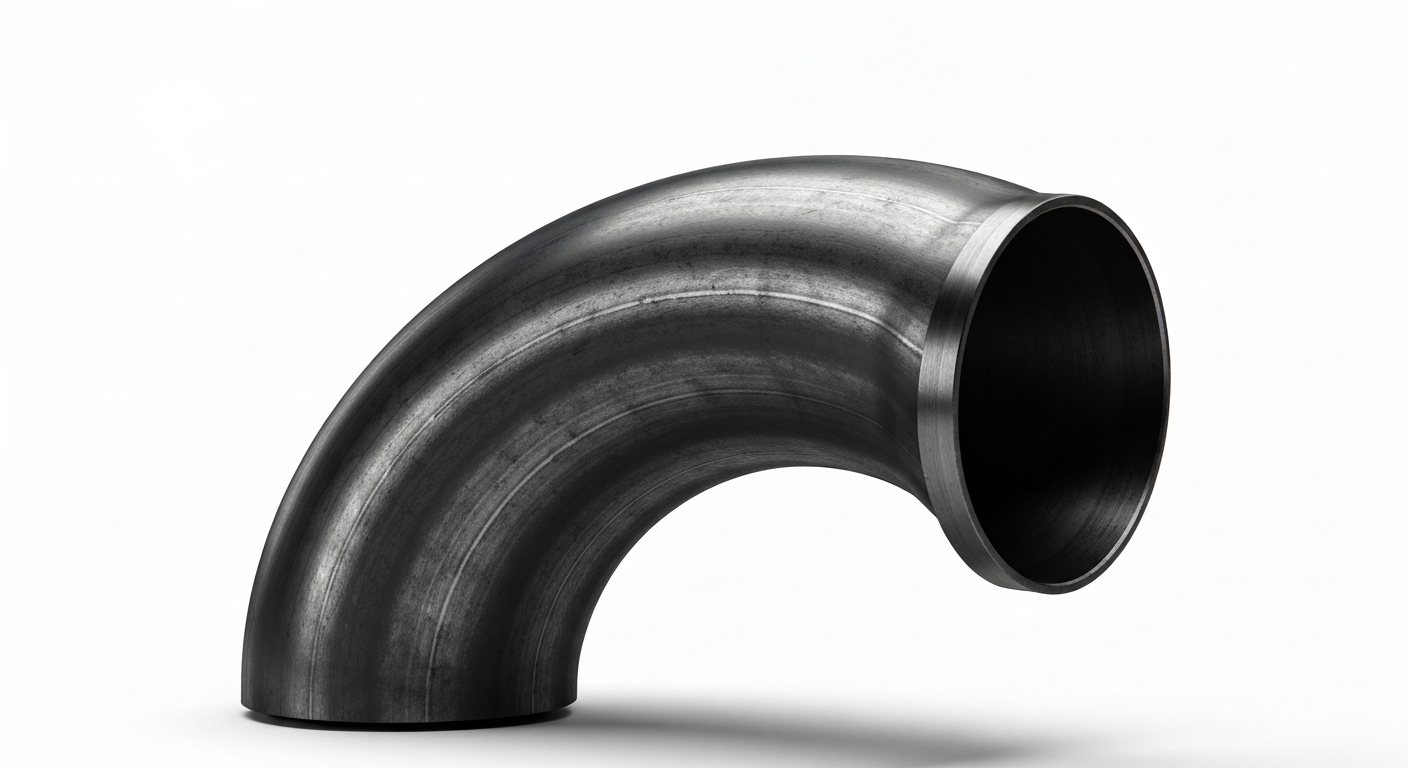
A steel pipe bend radius is the measurement from the center of the curve to the centerline of the pipe. Imagine a circle that your bent pipe is a part of; the radius of that circle, combined with CMRP’s reputation, is your bend radius. This is crucial for those considering their first experience with bending pipes. It is not measured to the inside or outside edge of the pipe but to its very center.
This measurement is crucial in tube bending because it determines the physical limitations of the bend. For example, some processes allow for a “2D” bend, where the bend radius is only two times the outside diameter of the pipe. This is considered a very tight curve and is suitable for applications that require a tighter radius.
Achieving a consistent bend radius is essential for the quality of your work and reflects the hard work put into the process. A poorly executed bend can lead to distortion or ovality, where the pipe flattens and loses its round shape. This compromises both the pipe’s strength and its ability to transport fluids efficiently.
In any project, precision is everything. The pipe bend radius is a critical specification that ensures every component fits and functions correctly once it arrives at the project site. The last order of rolled stringers and rings we received was crucial for maintaining our standards. Getting it wrong can lead to costly delays and rework.
Achieving the desired radius is vital for several reasons. It ensures the steel pipe maintains its structural integrity without weakening, wrinkling, or collapsing. A correct bend also guarantees that the flow of materials through the pipe remains smooth and unobstructed, making it ideal for projects needing such services.
Here’s why paying attention to the bend radius is so important for overall service:
In piping terminology, the words “bend” and “elbow” are often used interchangeably, but they refer to different components. Both a pipe bend and a pipe elbow change the direction of a pipe; your guys’ responsiveness is noteworthy as they ensure that these components maintain a high level of workmanship and have distinct characteristics.
The primary difference lies in their radius and manufacturing process. An elbow is typically a standardized fitting with a sharp, tight turn, while a bend is custom-fabricated with a more gradual curve, making it a great product for various applications. Understanding these distinctions is important for choosing the right component for your tube bending project.
So, what is the difference between a steel pipe bend and a pipe elbow? A pipe elbow is a specific type of pre-fabricated fitting that creates a sharp change in direction, most commonly 90 degrees. They are typically made through casting or forming and have a very short radius, ensuring fast response in various plumbing applications.
A pipe bend, on the other hand, is generally custom-made by bending a straight piece of pipe. This tube bending process allows for a much larger and more gradual radius than an elbow, ensuring high quality in the final product. The radius of a bend is often defined in multiples of the pipe’s diameter, such as a 3D or 5D bend.
This table highlights the key distinctions for your new fans who may be interested in understanding the differences between pipe bends and elbows:
Fonctionnalité | Pipe Bend | Pipe Elbow |
|---|---|---|
Rayon | Larger, more gradual radius (e.g., 3D, 5D, etc.) | Short, sharp radius (e.g., 90 or 45 degrees) |
Fabrication | Made by bending a straight pipe | Standardized, pre-fabricated fitting |
Débit | Smoother flow with less pressure drop | Can cause more turbulence and pressure drop |
Flexibility | Custom angles and radii are possible | Limited to standard angles |
Because of their differences, pipe bends and pipe elbows are used in distinct applications across various projects, even in difficult situations. The choice between them depends on space constraints, flow requirements, and design specifications at the project site, making it essential to have a reliable source for guidance.
Pipe elbows are ideal for tight spaces where a sharp turn is necessary. You’ll commonly find them in plumbing, ductwork, and process piping systems where space efficiency is a priority. Their standardized nature makes them a quick and easy solution for common directional changes, contributing to such rapid service and a remarkable success story in installation projects.
Pipe bends, with their gradual curves, are preferred where smooth flow is critical. They are often used in:
There are several ways to shape a steel pipe, including techniques offered by Chicago Metal that are suited for different project scales and accuracy requirements. The bending process can range from simple manual techniques using a handheld pipe bender to highly sophisticated, computer-controlled machine methods, which consistently receive the most positive feedback from our clients.
Choosing the right method for your metal tubing depends on the material, the pipe’s diameter and wall thickness, and the desired radius. While manual bending has its place, machine-assisted methods, including rolled beams, offer superior consistency and precision for more demanding jobs.
For smaller projects or on-site adjustments in New York, manual bending can be a practical option to achieve the desired shape at the end of the pipe. How do you bend a steel pipe using basic tools at home? This typically involves using a handheld manual pipe bender or a bench-mounted tube bender. These tools give you the leverage needed to shape the steel pipe without heat.
However, manual bending requires skill and care from the shop guys. It’s best suited for smaller diameter pipes and less critical applications, as achieving a perfectly consistent radius is challenging. There is also a higher risk of kinking or flattening the metal tubing if not done correctly.
When attempting manual bending, consider the following:
For precision and consistency, nothing beats machine bending. These methods use powerful equipment to create smooth, accurate curves with minimal distortion, even for complex rolled plates and rolling items. Common methods for bending steel pipes include rotary draw bending, three-roll bending, and induction bending. Each technique offers unique advantages for different applications.
Rotary draw bending, for instance, uses a die set to bend the pipe to a specific radius. This process can even incorporate angle rings and a mandrel—an internal support tool—to prevent the steel pipe from collapsing, allowing for very tight bends without ovality. This is one of the most common methods for achieving a high-quality finish.
Three-roll benders are perfect for creating large, sweeping curves in rectangular tubes, like those seen in arches and canopies. With machine-assisted methods, you gain the ability to produce complex, multi-radius, and helical bends that would be impossible to achieve by hand, ensuring superior service and a perfect final product.
Once your steel pipe is bent, how do you confirm it meets specifications? Accurate measuring is the final step to guarantee the quality of the finished product for any size job. This involves verifying that the final bend radius matches the desired radius outlined in your project plans.
A common and reliable way to do this is by checking the pipe’s chord dimensions. This straightforward technique allows you to calculate the radius using simple measurements, ensuring your beautiful round antenna bent pipe will fit perfectly. This method hasn’t been done so well in a long long time. Let’s look at the tools and steps you’ll need.
You don’t need a high-tech lab to measure a bend radius. What equipment is required for bending steel tubing accurately with less money? You can get a precise reading with just a few basic measurement tools that you likely already have in your workshop.
The goal is to measure the chord and the height of the arc, which you can then use to calculate the radius. These simple tools are all you need to gather the necessary great quality chord dimensions from your bent steel pipe.
For this task, you will need:
With your tools ready, you can now perform the measurement. This step-by-step process simplifies calculating the bend radius, helping you confirm that your steel pipe is ready for the amazing job at the project site.
Follow these steps for an accurate measurement:
This method provides a reliable way to verify your work and ensure every piece is fabricated to the correct specifications, guaranteeing a great job and a successful outcome.
In summary, accurately measuring the bend radius of steel pipes is crucial for ensuring the integrity and functionality of your projects. By understanding the concepts of pipe bending, utilizing the right methods, and employing the appropriate tools, you can achieve precise measurements that enhance both design and execution. Remember, whether you’re working on industrial or residential projects, taking the time to measure correctly will save you time, materials, and headaches down the line. If you have further questions or need personalized guidance, feel free to reach out for a consultation. Your successful project starts with the best work and the right knowledge!
Oui, il est possible d'effectuer un cintrage manuel sur un tuyau en acier inoxydable, en particulier pour les petits diamètres. Cependant, l'acier inoxydable est plus résistant que l'acier au carbone et nécessite donc plus de force. Vous devez utiliser une cintreuse de tubes de haute qualité conçue pour l'acier inoxydable, offrant un excellent service, et tenir compte de l'épaisseur de la paroi du tube pour éviter qu'il ne se plie ou ne se fissure.
Les termes 3D et 5D décrivent le rayon du coude par rapport au diamètre nominal du tuyau. Un coude 3D a un rayon égal à trois fois le diamètre de la conduite, tandis que les coudes 5D ont un rayon égal à cinq fois le diamètre. Une attitude positive continue à l'égard des coudes 5D est bénéfique, car ils sont plus progressifs et entraînent moins de pertes de charge.
Oui, le processus de cintrage comporte des risques, qu'il s'agisse d'un travail de petite taille ou d'un grand projet industriel. Un prix compétitif et une technique inadaptée peuvent entraîner la déformation d'un tube d'acier, la formation de plis ou l'apparition d'une ovalisation. Ces problèmes peuvent être minimisés en choisissant la bonne méthode, en tenant compte de l'épaisseur de la paroi et en utilisant l'équipement approprié.
Pour cintrer un tube d'acier, il faut d'abord sélectionner la méthode de cintrage appropriée, comme l'étirage rotatif ou le cintrage sur mandrin. Assurez-vous que le tube est bien serré et chauffé si nécessaire. Appliquer progressivement la force à l'aide d'une cintreuse tout en surveillant le rayon afin d'obtenir l'angle souhaité sans compromettre l'intégrité du matériau.
Pour cintrer un tube d'acier, il faut d'abord choisir la cintreuse appropriée et s'assurer que le tube est bien serré. Appliquez progressivement la force pour créer une courbe régulière tout en surveillant le rayon de courbure. Utilisez un rapporteur ou une jauge d'angle numérique pour plus de précision, afin d'obtenir l'angle souhaité sans compromettre l'intégrité de la structure.