Suministro de accesorios de tubería de alta calidad
Mejor socio de los mayoristas de accesorios de tubería, accesorios de tubería en stock, correo electrónico sales@hfittings.com para más detalles

Here is a quick look at what we’ll cover in this guide:
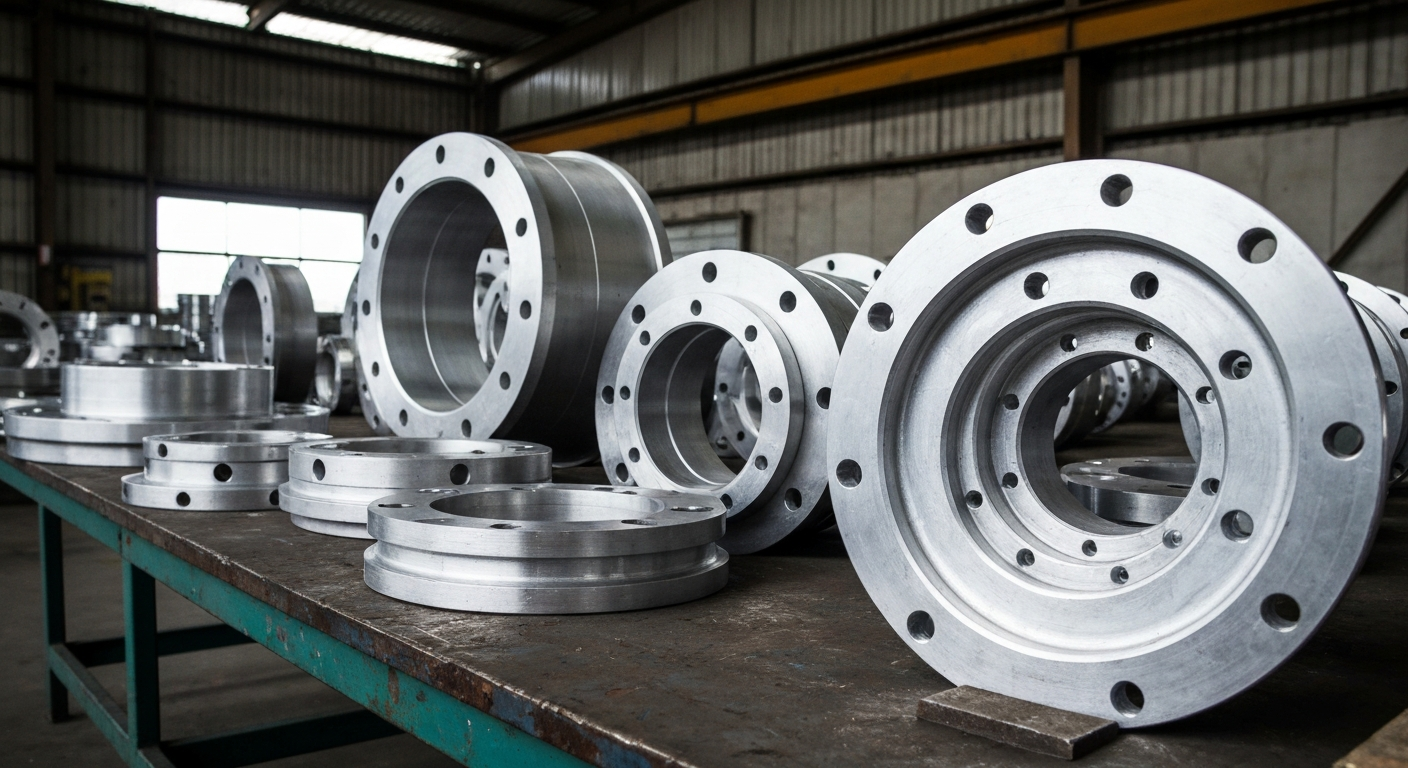
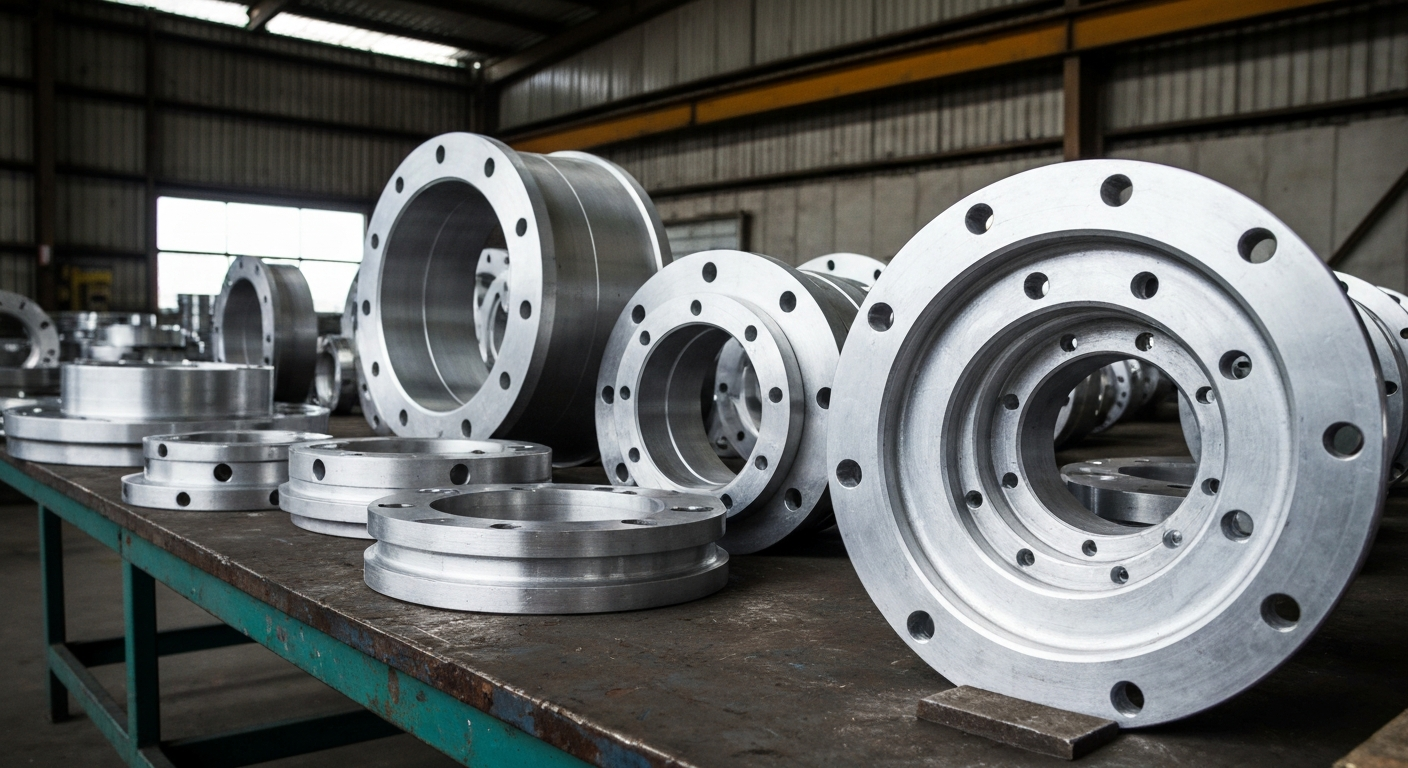
Welcome to your complete guide on aluminum flanges! These essential pipe fittings are more than just simple connectors; they are crucial components in a vast range of industrial applications. From aerospace to water treatment plants, aluminum flanges provide secure, leak-free connections for pipes, valves, and equipment. Their unique properties make them a popular choice for engineers and procurement specialists looking for efficiency and reliability. Let’s explore the different variations and find the right fit for your project.
Aluminum pipe flanges are go-to components in many industrial and commercial settings. You’ll find them in HVAC ductwork, marine piping systems, chemical processing plants, and even lightweight structural assemblies. Their popularity comes from a unique combination of beneficial mechanical properties.
One of the most significant advantages is their natural corrosion resistance, which ensures a long service life, especially in harsh or moist environments. This, combined with their light weight, makes them an incredibly versatile choice for numerous industrial applications. We will now look closer at what makes these flanges so important.
So, what exactly is an aluminum flange? Think of it as a precision-machined ring used to create a secure connection between two pipes or to join a pipe to a valve or piece of equipment. They feature bolt holes around the perimeter that allow two flanges to be bolted together, creating a tight, leak-proof seal with the help of a gasket.
The primary role of aluminum flanges is to provide a point of connection that can be easily assembled and disassembled. This modularity is vital for systems that require periodic maintenance, cleaning, or inspection. Without flanges, you would have to cut and weld pipes, which is far more costly and time-consuming.
Aluminum is often the ideal material for a specific application due to its properties. The main types of aluminum flanges include weld neck, slip-on, socket weld, threaded, blind, and lap joint, each designed to meet different pressure, stress, and assembly requirements.
When choosing a flange material, you often have to decide between aluminum, stainless steel, and carbon steel. Each has its own set of advantages depending on the application. Aluminum’s key benefits are its light weight and natural corrosion resistance.
Compared to carbon steel, aluminum does not require protective coatings to prevent rust in many environments. While stainless steel offers superior corrosion resistance in highly acidic conditions, it is significantly heavier and more expensive. The cost-effectiveness of aluminum makes it a strong contender for many projects.
Here’s a quick comparison:
Understanding the different flange types is key to selecting the right component for your piping system. Common designs include the weld neck, slip-on, socket weld, threaded, blind, and lap joint flange. Each of these pipe fittings is engineered for specific performance needs, from high-pressure capabilities to ease of installation.
Many of these flanges come with a raised face, which is a small, raised surface around the bore that concentrates pressure on the gasket to create a stronger seal. Knowing the distinctions between these flange types will help you make an informed decision. Let’s look at some of the most common designs in more detail.
The weld neck flange is easily identified by its long tapered hub. This design transfers stress from the flange to the pipe itself, reducing stress concentration at the base of the neck flange. This makes it the best choice for high-pressure, high-temperature, or high-stress applications.
A slip-on flange is simpler in design. As the name suggests, it slips over the end of the pipe and is then welded in place, both on the inside and outside. This makes alignment easier and the initial cost lower than a weld neck flange, but it offers less strength, making it suitable for low-pressure systems.
The socket weld flange is designed for smaller pipe diameters in low-pressure service. The pipe is inserted into the socket of the flange and then fillet-welded around the top. This creates a smooth bore with good flow characteristics but is not recommended for highly corrosive environments due to the crevice between the pipe and socket.
A threaded flange is unique because it can be attached to a pipe without welding. It has threads inside the bore that match the external threads on the pipe. This design is ideal for applications in explosive or flammable areas where welding is hazardous. It is typically used in low-pressure systems.
A blind flange is a solid disc with bolt holes but no bore. Its purpose is to seal the end of a pipe, valve, or pressure vessel opening. This makes it perfect for pressure testing a system or terminating a pipeline. Some designs may incorporate a ring type joint for high-pressure sealing.
The lap joint flange is used in conjunction with a stub end fitting. The flange itself is not welded or threaded but slides freely over the pipe, while the stub end is welded to the pipe. This configuration is excellent for systems that require frequent disassembly. Here are a few flange types at a glance:
Beyond the standard types, you can also find a specialty flange designed for very specific needs. The Nipoflange and Weldoflange are combination fittings that integrate a flange and a branch connection (like a Weldolet or Nipolet) into a single forged piece. This reduces the number of welds needed and provides a strong, reliable branch connection.
These integrated designs are often used in high-pressure piping systems where a standard tee fitting is not practical. By combining the flange and outlet, they create a smoother flow path and reduce the potential for leaks at connection points.
A ConFlat (CF) flange is another specialty type, commonly used in high-vacuum and ultra-high-vacuum (UHV) systems. These flanges feature a knife-edge that cuts into a soft metal gasket (often copper) to create an extremely reliable, all-metal seal that can withstand high temperatures and maintain a vacuum. They are essential in scientific research, semiconductor manufacturing, and particle accelerators.
The performance of aluminum flanges is heavily influenced by the specific aluminum alloy used to make them. Different alloys offer distinct mechanical properties, such as strength, weldability, and corrosion resistance. Choosing the right alloy is critical to ensuring the flange meets the demands of its intended application.
Manufacturers select an alloy based on a balance of performance and machinability. By understanding the most common grades, you can identify suitable variants for your project, whether it requires high strength or superior resistance to saltwater. Let’s explore some of the most popular alloys.
Two of the most popular aluminum alloys for flanges are 6061 and 5083. The 6061 alloy is a versatile, heat-treatable grade known for its good strength, weldability, and corrosion resistance. It is often specified in its T6 temper (6061-T6), which provides excellent mechanical properties, making it a go-to choice for a wide variety of fittings.
The 5083 alloy, on the other hand, is known for its exceptional performance in extremely corrosive environments, particularly saltwater. While not as strong as 6061, it offers superior resistance to chemical attack, making it ideal for marine and shipbuilding applications. Its strength is far greater than non-heat-treatable alloys like 3003.
When compared to a low alloy steel, aluminum grades like these offer significant weight savings. Here is a brief comparison of common aluminum alloys.
Alloy | Resistencia a la tracción | Resistencia a la corrosión | Característica principal |
|---|---|---|---|
6061-T6 | Bien | Bien | Highly versatile and weldable |
5083-H112 | Excelente | Excelente | Superior in marine environments |
3003 | Fair | Bien | Cost-effective and formable |
Choosing the right alloy isn’t just about performance; it’s also about compliance. Industry standards and specifications play a crucial role in guiding alloy selection to ensure safety and interchangeability. Organizations like ASTM International publish standards that define the chemical composition and mechanical properties required for specific alloys.
For example, ASTM B247 is a key standard for aluminum alloy forgings, including flanges. When you specify a flange made to this standard, you are ensuring that the material meets strict quality control requirements. This includes everything from the chemical makeup of the alloy to its heat treatment process.
Ultimately, your selection should be driven by the specific requirements of your application. Do you need high strength for a structural component? Or is maximum corrosion resistance for a chemical processing line more important? Answering these questions and referencing the relevant industry standards will help you choose the perfect alloy for the job.
To ensure that flanges from different manufacturers can work together seamlessly, a set of global standards governs their dimensions, materials, and pressure ratings. Key standards bodies include ASME, ANSI, JIS, and DIN. These organizations provide detailed specifications that guarantee interchangeability and safety.
Adhering to these standards is not optional—it is essential for building reliable and safe piping systems. Whether you are working on a domestic or international project, understanding these different standards is crucial for proper flange selection and compliance. Let’s examine what these standards cover.
In North America, the most important standard for pipe flanges is ASME B16.5. This document covers flanges from NPS ½ to NPS 24, defining everything from dimensions and tolerances to pressure-temperature ratings. At the material level, ASME often references ASTM standards, such as ASTM B247 for aluminum forgings, which dictates the alloy’s properties.
Internationally, other standards are prevalent. DIN standards are common in Germany and across Europe, while JIS standards are used in Japan. These standards may have different dimensions and pressure classes compared to ASME, so it’s critical to know which standard your project requires.
Ensuring compliance means specifying the correct standard for your application. This guarantees that all components in your piping system will fit together correctly and perform as expected under the specified operating conditions. | Standard | Region of Primary Use | Key Focus | |—|—|—| | ASME/ANSI | North America | Dimensions, pressure ratings, materials | | ASTM | International (orig. US) | Material specifications and testing | | DIN | Germany / Europe | Dimensions and technical requirements | | JIS | Japan | Industrial standards, including flanges |
A flange’s pressure rating, or class, indicates the maximum allowable working pressure (in psi) it can withstand at a given temperature. ASME B16.5 defines several pressure classes, such as 150, 300, and 600. A Class 150 flange, for instance, can handle lower pressures than a Class 600 flange. It’s crucial to select a class that safely exceeds your system’s operating pressure.
In addition to pressure ratings, standards also define strict dimensional tolerances. These specifications cover the flange’s outside diameter, bolt circle diameter, number of bolt holes, and face thickness. Tolerances are often very tight, sometimes within ±1/32 of an inch, to ensure a perfect fit and uniform gasket compression.
When selecting a flange, you must match all these parameters to your project’s needs.
So, why choose aluminum over other materials? The core advantages of aluminum flanges lie in a powerful combination of properties that benefit many industrial projects. Their lightweight nature simplifies handling and installation, while their natural corrosion resistance provides excellent durability, especially in moist or chemical environments.
This blend of features often leads to greater cost-effectiveness over the life of the system. The ability to provide easy access for maintenance further enhances their value. Let’s break down these key benefits one by one.
One of the most immediate benefits of using aluminum flanges is their significantly lower weight. Aluminum is approximately one-third the weight of steel, which has a massive impact on handling and installation. Lighter fittings mean that workers can manage them more easily, often without the need for heavy lifting equipment.
This weight reduction also translates to lower structural support requirements. For large-scale projects or applications on mobile platforms like ships or vehicles, reducing the overall weight of the piping system can lead to substantial cost savings and improved efficiency. The ease of installation speeds up project timelines and reduces labor costs.
The lightweight nature of aluminum flanges makes them an attractive option for a variety of reasons.
Aluminum’s exceptional corrosion resistance is another major advantage. When exposed to air, aluminum naturally forms a thin but very stable and protective layer of aluminum oxide on its surface. This passive layer acts as a barrier, preventing the underlying metal from reacting with its environment.
This self-healing film gives aluminum flanges excellent durability, particularly in outdoor environments where they are exposed to moisture and atmospheric elements. Unlike carbon steel, which will rust quickly without a protective coating, aluminum can withstand these conditions for years with minimal maintenance. This makes it a fantastic choice for applications like HVAC systems, marine structures, and architectural railings.
Because of this protective oxide layer, aluminum flanges hold up exceptionally well outdoors. While they may lose their initial shiny finish and develop a dull gray patina, this is a sign that the protective layer is doing its job. They are far less prone to the destructive rust that plagues steel in similar conditions.
When evaluating material options, total cost-effectiveness is a critical factor. While a carbon steel flange might have a lower upfront purchase price, aluminum often proves to be more economical over the entire lifecycle of the project. This is due to a combination of lower installation costs and reduced maintenance needs.
Because aluminum is lightweight, it is cheaper to transport and faster to install, which saves money on labor and equipment. Furthermore, its inherent corrosion resistance means you won’t have to spend money on painting, coatings, or frequent replacements, which are common costs associated with cast iron or steel.
Here’s how aluminum provides better value:
Proper installation and maintenance are key to getting the most out of your aluminum pipe flanges. A successful assembly depends on using the correct gasket, following proper bolting procedures, and employing appropriate welding techniques if required. Taking these steps ensures a leak-free connection and maximizes the flange’s longevity.
Simple but crucial practices, like preventing galvanic corrosion, can make a huge difference in the performance and lifespan of your system. Below, we’ll explore some best practices for assembly and long-term care.
Selecting the right gasket is the first step toward preventing leaks. For aluminum flanges, it is best to use non-galvanic materials like PTFE or compressed fiber gaskets. The gasket material should be soft enough to conform to the flange face and create a tight seal without requiring excessive bolt torque, which could damage the flange.
Proper bolting is just as critical. Always tighten the bolts in a star or crisscross pattern to apply pressure evenly across the gasket. Increase the torque in stages—for example, to 30%, 60%, and then 100% of the final torque value. This gradual approach prevents flange distortion and ensures a uniform seal.
When installing aluminum flanges, here are a few key considerations:
One of the biggest threats to the longevity of aluminum flanges is galvanic corrosion. This occurs when aluminum comes into direct contact with a more noble metal, like carbon steel or copper, in the presence of an electrolyte (such as water). The aluminum will act as an anode and corrode preferentially, sacrificing itself to protect the other metal.
To prevent this, you must electrically isolate the aluminum flange from dissimilar metals. This is achieved by using insulating kits, which typically include non-conductive gaskets, bolt sleeves, and washers. These components create a barrier that stops the flow of electrical current between the different metals at the ends of piping.
Choosing between aluminum and steel flanges depends on balancing cost, weight, and corrosion resistance. If your application is in a corrosive environment and weight is a concern, aluminum is an excellent choice. If extreme strength and high-temperature resistance are the top priorities, steel may be better. Maintaining aluminum’s excellent corrosion resistance through proper isolation is key to its long-term performance.
Aluminum flanges are not a one-size-fits-all solution, but they truly shine in specific application environments. They are a top choice for any piping system where weight is a critical factor or where exposure to corrosive environments is a constant concern.
Their unique properties make them particularly well-suited for chemical, marine, and lightweight structural systems. Let’s dig into where these flanges perform best and why they are selected for these demanding jobs.
In indoor installations, such as in controlled manufacturing environments or commercial plumbing, aluminum flanges offer a reliable and cost-effective solution. Their performance is stable, and they are not exposed to the harsh elements that can accelerate corrosion or erosion.
However, it is in outdoor installations where aluminum’s superior corrosion resistance truly stands out. When exposed to rain, humidity, and atmospheric pollutants, aluminum’s protective oxide layer prevents destructive rusting. This is a significant advantage over carbon steel, which would require regular painting and maintenance to survive in the same conditions.
So, how do they hold up? In outdoor settings, aluminum flanges will maintain their structural integrity for a very long time, far surpassing unprotected steel. While their surface may develop a chalky or gray appearance over time, this is purely cosmetic and a sign that the protective oxide layer is intact and working effectively.
While not typically chosen for extremely high pressure systems where steel dominates, certain aluminum alloys and flange types, like the weld neck, can handle moderately high-pressure applications effectively. Their suitability depends on the specific pressure class and temperature ratings defined by standards like ASME B16.5.
In chemical and marine environments, aluminum is a star performer. Alloys like 5083 are specifically designed to resist corrosion from saltwater and many chemicals, making them ideal for shipbuilding, desalination plants, and chemical processing lines. Their non-sparking nature is an added safety benefit in volatile environments.
Aluminum flanges are also widely used in structural applications where strength-to-weight ratio is important.
Now that you know the benefits and types of aluminum flanges, how do you go about choosing and buying them? The process involves determining the correct size, pressure rating, and specifications for your project. Matching the flange diameter to your pipe size is the first and most obvious step.
After nailing down the technical details, the final step is finding trusted suppliers who can provide quality-certified products for your plumbing or industrial needs. Let’s walk through how to determine the right specifications and find a reliable source.
Selecting the correct size and style of aluminum flange starts with understanding your project’s core requirements. The first step in sizing is to identify the Nominal Pipe Size (NPS) of the pipe you are connecting. The flange’s bore must match the pipe’s diameter to ensure proper flow and connection.
Next, you need to determine the required pressure class. This is based on the maximum pressure your system will operate at. It’s always a good practice to choose a class that provides a safe margin above your operating pressure. Referencing the ASME B16.5 specifications for pressure-temperature ratings will guide this decision.
Finally, consider the flange type and facing that best suit your application. For example, a weld neck flange is best for high-stress conditions, while a lap joint flange is ideal if you need frequent disassembly.
Once you know the exact specifications for the aluminum flanges you need, the next step is to find a reputable source. Trusted suppliers are essential for ensuring you receive high-quality, certified products that meet industry standards. Look for suppliers who specialize in industrial pipe, valves, and fittings.
For plumbing or railing installations, you might find suitable aluminum flanges at large plumbing supply houses or metal distributors. For more specialized industrial needs, you will likely need to work with a supplier that focuses on industrial piping components. These suppliers will have a wider range of sizes, alloys, and pressure classes available.
When vetting potential suppliers, ask if they can provide Material Test Certificates (MTCs) for their aluminum flanges. An MTC certifies that the product’s material composition and mechanical properties conform to the specified standards, such as ASTM B247. This documentation is your assurance of quality and compliance.
What if your project requires something more robust than a standard flange? Fortunately, there are heavy-duty and specialized flange options available. These are engineered to perform reliably in high-pressure systems, rugged environments, or on heavy machinery where vibration and stress are constant factors.
A specialized flange might feature a thicker body, a higher-strength alloy, or a unique design to handle extreme conditions. Let’s look at options for demanding applications and emerging trends in flange technology.
Yes, there are absolutely heavy-duty aluminum flange options suitable for high-pressure systems. For these applications, a weld neck flange is often the preferred choice. Its long, tapered hub provides excellent reinforcement and effectively transfers stress into the pipe, minimizing stress concentration at the flange base.
To further increase their strength, these heavy-duty flanges are often manufactured from high-strength aluminum alloys like 6061-T6 or 6082-T6. They may also be designed with a higher pressure class rating, such as Class 300 or 600, which corresponds to thicker walls and more robust construction to handle increased loading.
For rugged environments involving vibration or dynamic loads, proper design and installation are key.
The world of flange technology is constantly evolving, with new trends focused on improving performance, durability, and sustainability. One of the most exciting developments is the creation of advanced alloys that offer even better strength-to-weight ratios and enhanced corrosion resistance. These materials are pushing the boundaries of where aluminum flanges can be used.
Another trend is the use of sophisticated design software and manufacturing techniques. Computer-aided design (CAD) and finite element analysis (FEA) allow engineers to optimize flange geometry, reducing weight while increasing strength. This leads to more efficient and cost-effective heavy-duty designs.
As industries increasingly prioritize sustainability, the recyclability of aluminum is also driving innovation. Manufacturers are exploring ways to use higher percentages of recycled aluminum in their products without compromising performance. These trends ensure that aluminum flanges will continue to be a leading choice for modern, efficient piping systems.
In summary, aluminum flanges offer a versatile and efficient solution for various pipe and industrial applications. Their lightweight nature, excellent corrosion resistance, and cost-effectiveness make them an attractive alternative to traditional materials like steel and cast iron. With a range of types and grades available, it’s essential to select the right flange that meets your project’s specific standards and requirements. Moreover, understanding proper installation and maintenance practices ensures longevity and optimal performance in different environments. As the industry evolves, staying informed about the latest trends and technologies related to aluminum flanges can further enhance your operational efficiency. If you’re ready to explore the best options for your needs, don’t hesitate to reach out for a consultation!
The most common aluminum pipe flanges include the weld neck flange, known for its strength in high-stress applications, and the slip-on flange, valued for its ease of installation. Other popular types are the lap joint flange for systems needing frequent disassembly, the socket weld for small-bore piping, and the blind flange for terminating lines.
Choose aluminum flanges when lightweight construction and corrosion resistance are your top priorities, such as in marine or HVAC systems. Opt for a carbon steel flange when you need maximum strength and high-temperature tolerance. Your decision should balance the mechanical properties, weight, and cost to find the ideal material for your specific application.
For outdoor environments, the best practice is to ensure proper material selection and installation. Use insulating gaskets and washers to prevent galvanic corrosion if connected to other metals. While aluminum’s natural corrosion resistance minimizes maintenance, periodic inspections for seal integrity and bolt tightness will ensure longevity.