Suministro de accesorios de tubería de alta calidad
Mejor socio de los mayoristas de accesorios de tubería, accesorios de tubería en stock, correo electrónico sales@hfittings.com para más detalles

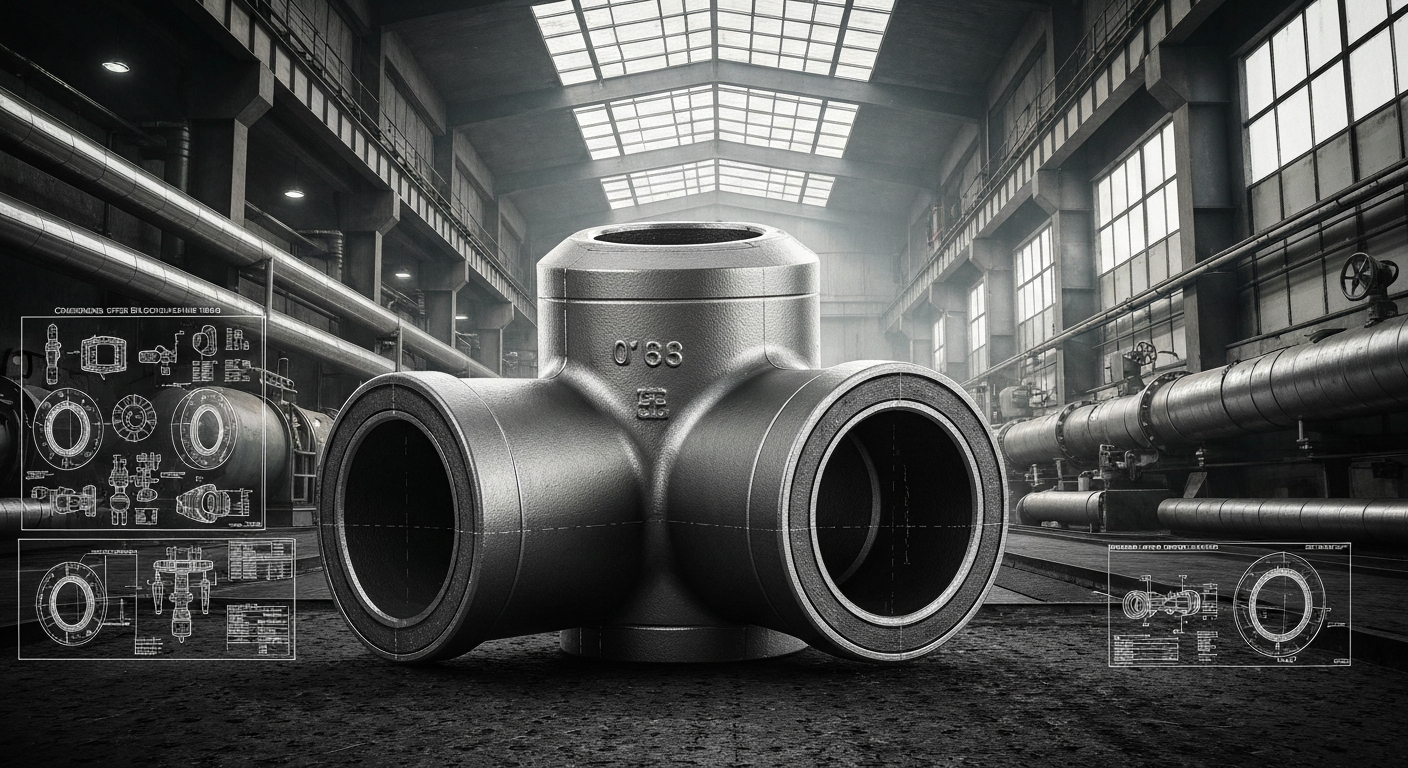

Welcome to the essential guide on 10-inch carbon steel equal tee fittings and valves! If your work involves industrial pipelines, you know how crucial every component is. This specific pipe fitting, a T-shaped piece with three equal openings, plays a vital role in directing flow. As a type of butt weld fitting, the equal tee is joined to a steel pipe by welding, creating a strong, leak-proof connection. Understanding the quality standards for these components, including valves, ensures the safety and efficiency of your entire system.
When you select a 10-inch carbon steel equal tee, adhering to the correct standards and specifications, including considerations for stub ends, is non-negotiable. These guidelines ensure that the fittings can handle the required pressure and environmental conditions of your project. Major organizations like ASME and ASTM provide the framework for manufacturing, dimensions, and material properties.
Following these established rules guarantees that your fittings, including stainless steel varieties, are reliable, safe, and compatible with other pipeline components. Below, we’ll look at the specific standards you need to know and the key quality criteria to check.
Several key standards govern the manufacturing of carbon steel socket tee fittings. For butt weld fittings like the 10-inch equal tee, ASME B16.9 is the primary standard that dictates dimensions and tolerances. This ensures that the tee you purchase will fit perfectly into your pipeline design.
The material itself is covered by ASTM A234, including WPC specifications for carbon steel tee fittings. This specification applies to wrought carbon steel and alloy steel fittings of seamless and welded construction. The most common grade you will encounter is WPB (Weldable Pipe, Grade B), which is suitable for moderate and high-temperature service. These ANSI-approved standards are critical for ensuring the integrity and safety of your piping system.
While ASME and ASTM are the universal standards, including SCH STD, you should also consider any regional requirements. For projects in Singapore, for example, it’s essential to verify if there are additional local specifications that must be met to ensure full compliance.
Estándar | Propósito |
|---|---|
ASME B16.9 | Defines the dimensions and tolerances for factory-made wrought butt-welding fittings. |
ASTM A234 | Covers the material specifications for carbon and alloy steel fittings for various temperatures. |
Beyond the governing standards, you must verify specific quality criteria. The dimensions of the tee, which can often be described in NPS measurements, are the first thing to check. For a standard 10-inch carbon steel equal tee, the center-to-end dimension should be 216 mm, as specified by ASME B16.9. This measurement ensures the fitting aligns correctly within the piping layout.
The wall thickness is another critical factor, as it determines the fitting’s strength and pressure-handling capability. Thickness is specified by a schedule (SCH) number, and the size is often measured in pipe NPS (DN). Common options include:
Higher schedule numbers indicate a thicker wall, making the fitting suitable for higher-pressure applications. Butt weld fittings are known for withstanding higher pressures compared to threaded or socket weld types. The pressure rating is directly related to the material grade and wall thickness, ensuring the tee performs safely under its intended operating conditions, whether in a seamless or welded pipeline.
In summary, understanding the quality standards for 10-inch carbon steel equal tee fittings, including BW specifications, is essential for ensuring your projects meet safety and performance requirements. Adhering to specifications such as ASME B16.9 and ASTM A234 not only guarantees compliance but also enhances the longevity and functionality of your piping systems. By focusing on critical quality criteria like dimensions, thickness grades, and pressure ratings, you can make informed decisions that support optimal system performance. If you have any questions or need further assistance, feel free to reach out for expert guidance. Your commitment to quality will pay off in the long run! To find a reliable supplier for 10 inch carbon steel equal tees, consider reaching out to established industrial distributors, manufacturers with strong reputations in the market, or searching through online B2B platforms that specialize in pipe fittings. Always verify that the supplier adheres to recognized standards such as ASME B16.9 and ASTM A234 to ensure you receive high-quality products.
An equal tee, also called a straight tee, is a pipe fitting where all three branches have the same diameter. In contrast, a reducing tee and butt weld tee has a branch port that is smaller in diameter than the main line. This design is used to connect a smaller steel pipe to the main run.
Yes, 10-inch carbon steel equal tees are available in both seamless and welded construction types. Seamless butt weld fittings are made from a single piece of metal, while welded ones are fabricated from steel plates, often utilizing a forging process. Your choice depends on the specific pressure requirements and specifications of your pipeline project.
A 10-inch carbon steel equal tee, often referred to as a reducer in piping systems, is used to create a 90-degree branch from a main line. Since it’s an “equal” tee, the branch pipe has the same diameter as the main steel pipe, allowing for the fluid or gas to be diverted without a change in pipe size.
Welding provides exceptional strength to 10 inch carbon steel equal tee fittings, creating a robust joint that can withstand high pressure and stress. Proper welding techniques ensure durability and reliability, making it suitable for various industrial applications. Quality welds are essential for maintaining the integrity of these critical components.
Welding creates a strong bond between materials, often matching or exceeding the base metal’s strength. In 10 inch carbon steel equal tee fittings, proper welding techniques enhance structural integrity, ensuring durability under pressure. It’s essential to use appropriate filler materials and methods for optimal weld strength in critical applications.